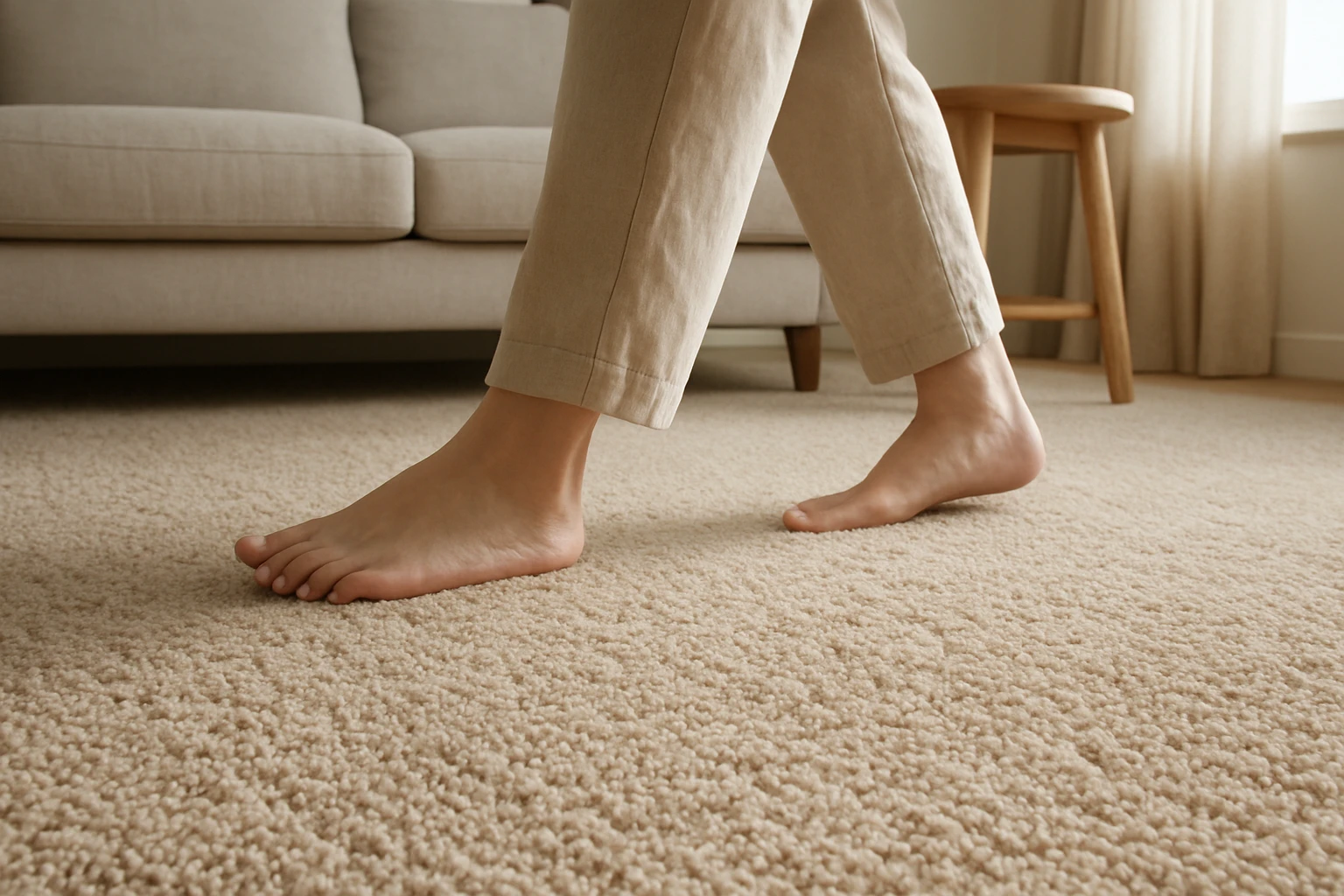
Wool carpets offer softness, warmth underfoot, less room echo, and fibres that spring back well after everyday use. Wool is a renewable natural fibre that resists dry soil and flames, though carpet quality and care still matter. The main drawbacks are a higher purchase price, the need for prompt spill care, and poor suitability for damp rooms.

Why Does Wool Carpet Feel Comfortable and Quiet?
Wool carpet feels comfortable because its curled fibres form a cushioned surface that holds air. That structure helps slow heat loss through the floor, while the carpet and underlay absorb some sound within the room.
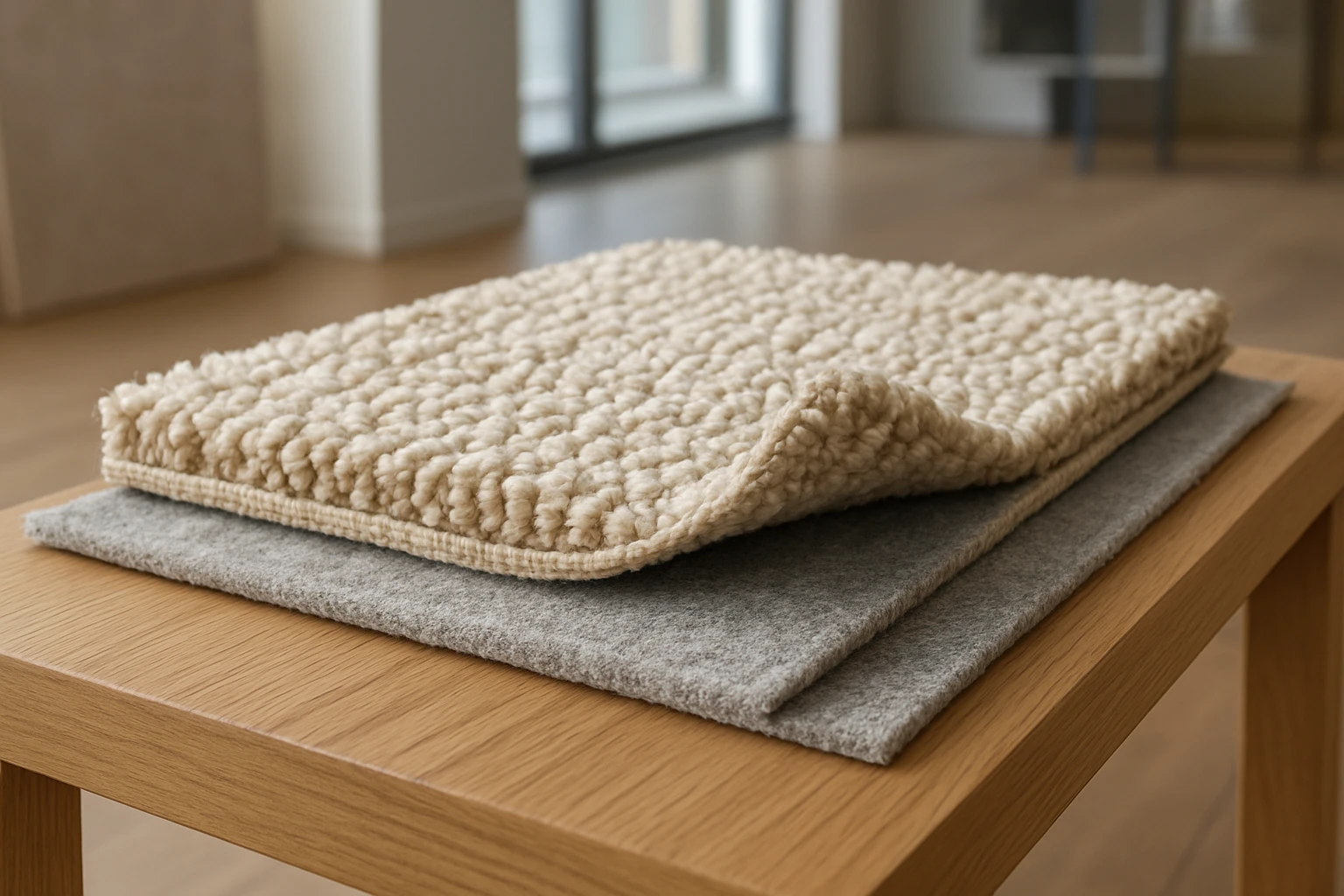
If you’re comparing flooring through Dubai Office Carpet, judge the carpet and underlay together. A soft sample on a display board may feel quite different once it is fitted over a firm base.
Softness Without a Deep Pile
Wool does not need a very long pile to feel pleasant under bare feet. Pile means the upright fibres or loops that make up the carpet surface, and their height, thickness, and finish all affect comfort.
A short, dense wool carpet can give a bedroom a soft feel without showing as many footprints or being as hard to vacuum as a deep pile. For someone using a walking frame or wheeled chair, a firm, low-pile surface is usually more practical than a thick, loose one. Still, check that the carpet and underlay together allow safe, easy movement.
Warmth That Depends on the Room
Wool carpet feels warmer than tile because it draws heat away from your feet more slowly. This can make a clear difference in an air-conditioned bedroom, even in Dubai’s hot climate.
That does not mean wool carpet will cut every home’s cooling bill. Room temperature, insulation, glazing, and air-conditioning use have a much greater effect, and carpet can slow heat transfer in either direction. Choose wool for comfort rather than a promised energy saving.
Less Echo, Not Complete Soundproofing
Carpet helps absorb reflected sound, so speech and footsteps can sound less sharp in rooms with large windows and bare walls. Underlay can also help reduce impact noise, such as footsteps heard below, but the floor structure and fitting method affect the result.
For an upstairs room, ask for sound test information for the complete carpet and underlay system. A thick wool sample alone does not prove that a neighbour will hear less noise.
Does Wool Carpet Keep Its Shape Well?
Wool carpet generally holds its shape well because the fibres have a natural curl and spring. This helps the pile recover after normal foot traffic, but it does not prevent all flattening or furniture dents.
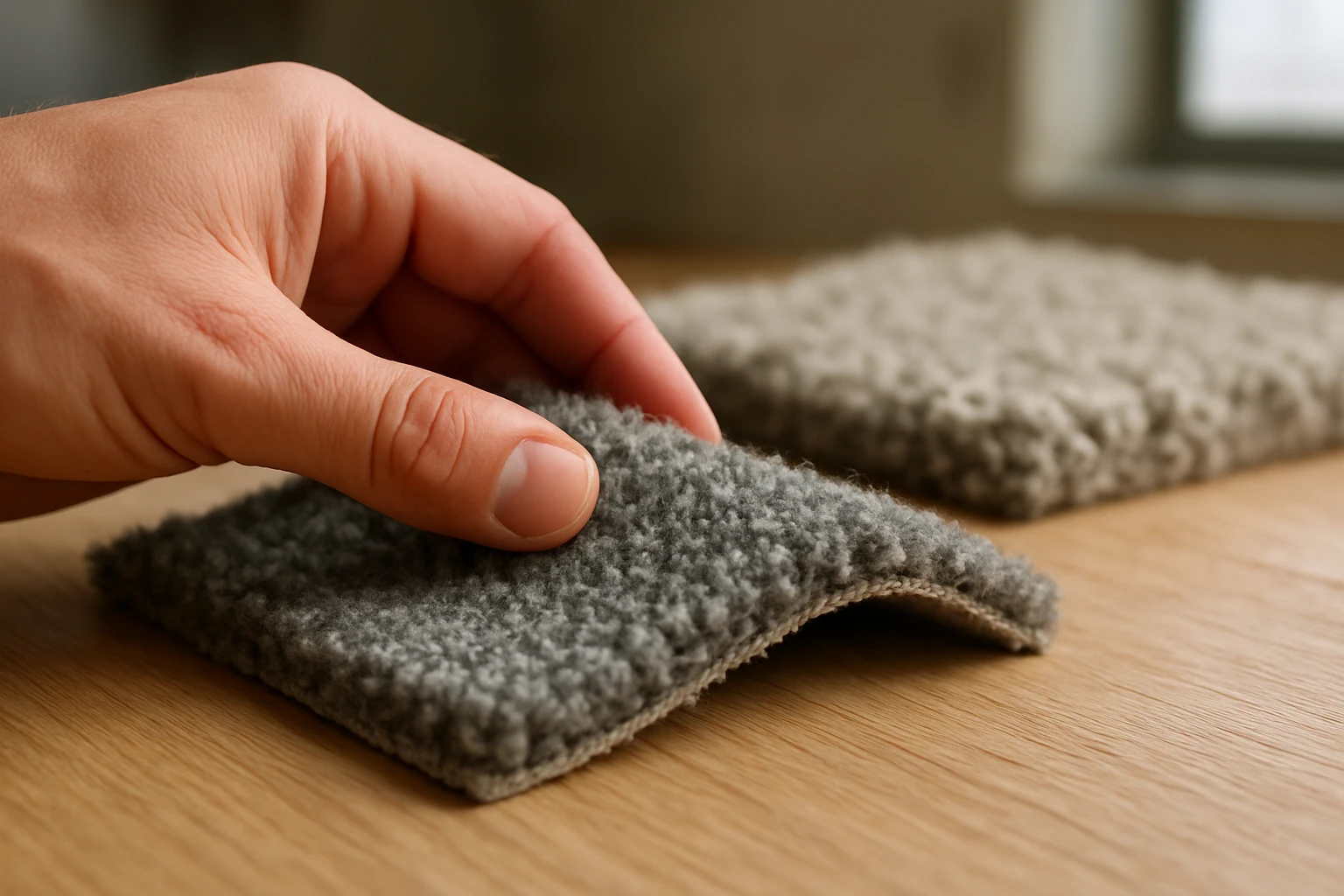
Density and construction matter as much as fibre content. A loose wool carpet may show wear sooner than a well-made synthetic carpet, so “100% wool” is not enough information to judge how it will perform.
Match the Pile to the Traffic
A dense, short pile is often the safer choice for a busy hallway or living room. Long, soft piles can look inviting, but they tend to show changes in direction and pressure more clearly.
For stairs, ask whether the exact carpet is rated for stair use. The fibres bend around each tread edge, and that repeated pressure makes suitability more important than softness alone.
Loop-pile wool carpets can hide footprints well, but claws may catch and pull individual loops. In a home with a cat that scratches flooring, compare a tightly made cut pile with the loop sample before buying.
Know the Difference Between Wear and Shading
A wool carpet can change appearance without losing fibres. When the pile lies in a different direction, light reflects from it differently, which can create darker or lighter patches.
Cut-pile carpets can also develop lasting pile reversal, sometimes called pooling. It may look like a water mark even when the carpet is dry, and it is not necessarily a cleaning fault. Ask how the supplier treats this appearance change under its product warranty before choosing a plain, smooth finish.
Heavy furniture can still leave dents in wool. Use suitable furniture cups to spread the load, and do not assume that steam or heat will safely remove every mark.
How Does Wool Compare with Synthetic Carpet?
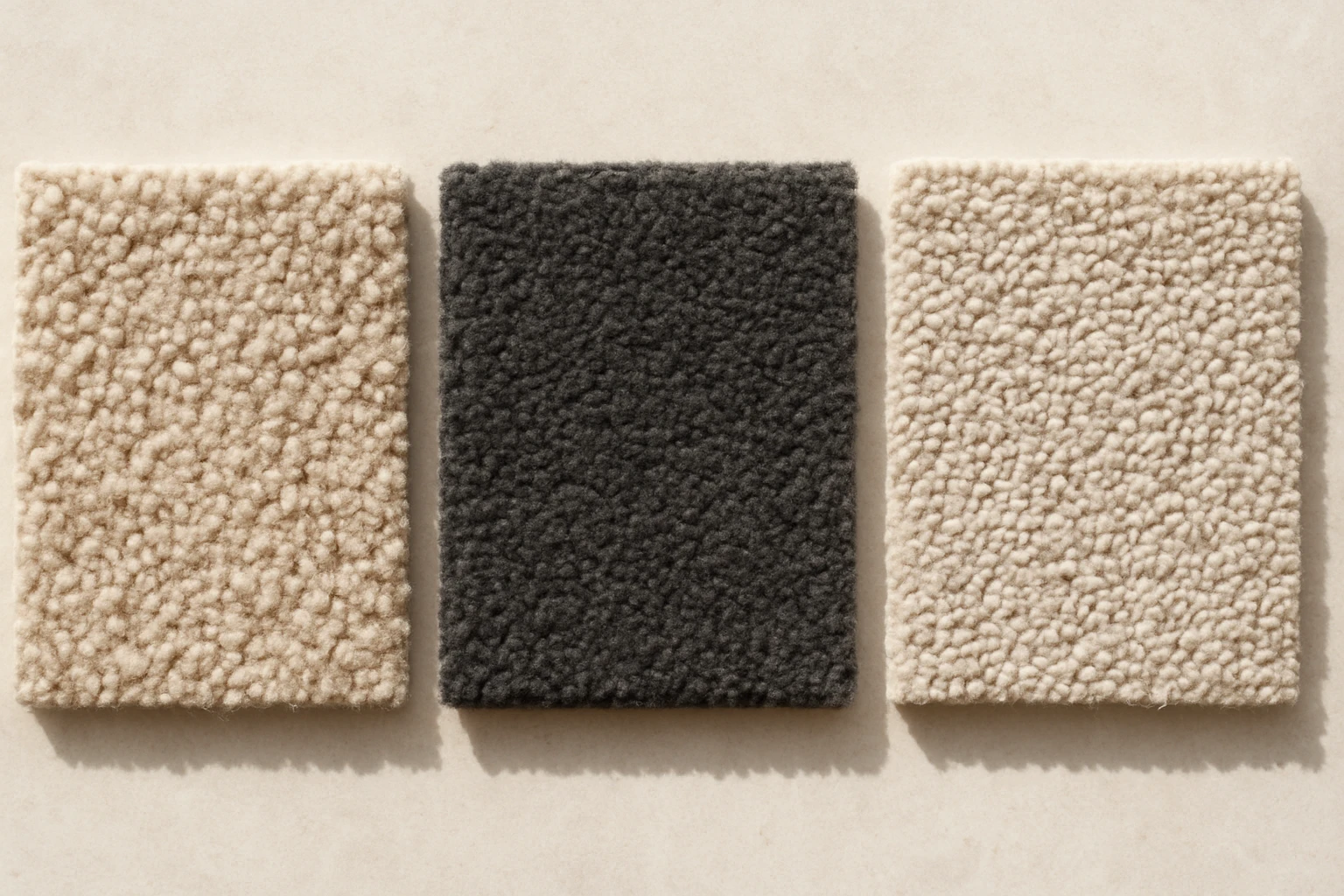
Wool is a good choice for natural texture, comfort, and pile recovery, while synthetic carpet often offers a lower purchase price or easier stain care. The best choice depends on the exact product and the main risks in the room.
| Factor | Wool | Nylon | Polypropylene |
|---|---|---|---|
| Feel | Often soft, with a natural texture | Varies from firm to very soft | Varies, often used in value ranges |
| Recovery After Pressure | Naturally good, though dents remain possible | Generally very good in suitable constructions | Often less resilient under repeated pressure |
| Stain Behaviour | Needs prompt care, especially with coloured liquids | Depends on stain treatment and fibre type | Resists many water-based stains but attracts oily soil |
| Moisture | Absorbs water vapour and needs careful drying after cleaning | Lower moisture uptake than wool | Very low fibre moisture uptake, though backing can still stay wet |
| Initial Cost | Usually higher | Often mid-range to higher | Often lower |
| Main Reason to Choose | Natural feel and balanced comfort | Busy use where resilience is a priority | Lower initial budget and suitable stain performance |
These are broad fibre differences, not a ranking of every carpet on sale. A dense nylon carpet made for heavy use may be a better office floor than a light domestic wool carpet.
A wool blend can offer a middle ground. For example, an 80% wool and 20% nylon carpet combines mostly wool pile with nylon, but the blend ratio alone does not prove that it will perform better than a well-made pure wool product.
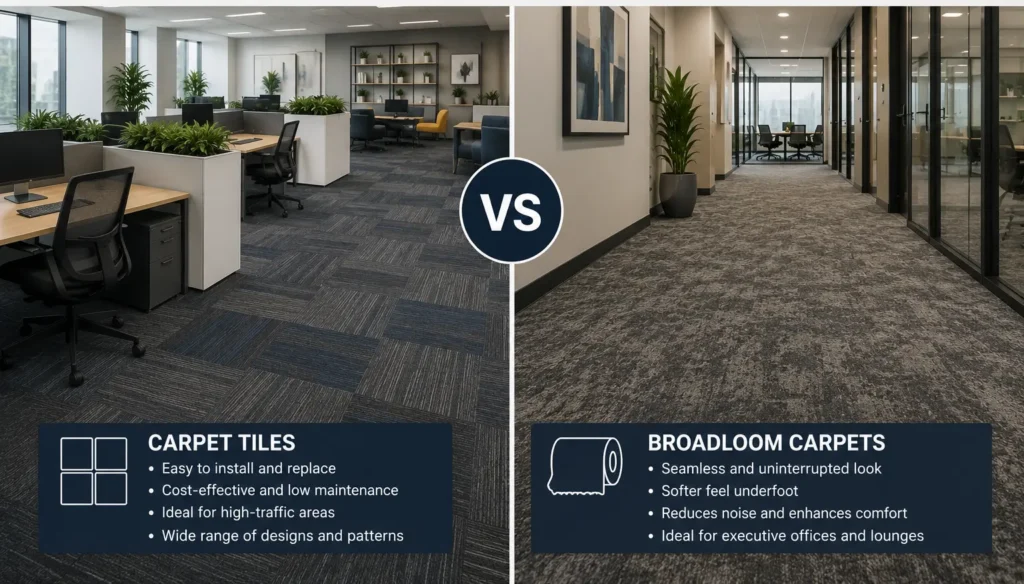
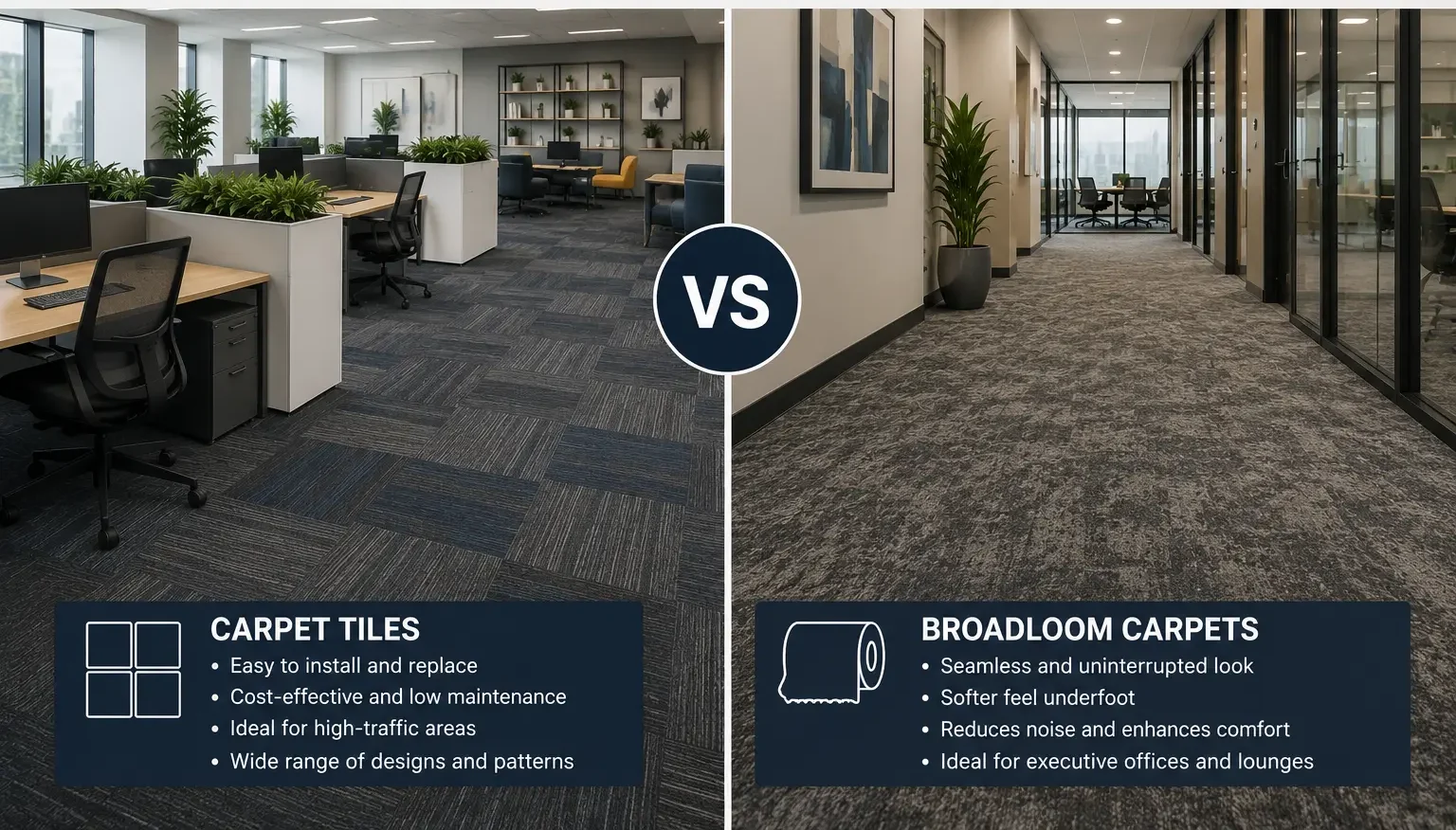
The choice between tiles and rolls matters too. In a busy office where stains are likely to affect small areas, being able to replace one tile may be more useful than choosing a particular fibre. The comparison of carpet tiles and broadloom carpets explains this part of the buying decision.
What Are Wool’s Natural Benefits and Their Limits?
Wool is renewable, naturally resistant to catching fire, and able to absorb and release moisture from the air. These are useful traits, but they do not make every wool carpet fireproof, able to control room humidity, or harmless to the environment.
Renewable Fibre Does Not Mean a Fully Natural Carpet
Sheep grow new wool, and untreated wool fibre can biodegrade under suitable conditions. A finished carpet may also contain synthetic backing, adhesives, dyes, and protective treatments. These affect its overall environmental impact and how it can be disposed of.
Ask for the full list of materials rather than relying on a “natural carpet” label. For a project with an environmental target, look for a product-specific environmental declaration, where available, and check what local waste facilities can actually accept.
A carpet that stays useful for longer can avoid early replacement, but that benefit depends on choosing the right construction and caring for it well.
Flame Resistance Still Needs Product Testing
Wool tends to char rather than melt and drip like some synthetic fibres. It can still burn, and the backing and fitting system also affect how it behaves in a fire.
For offices, shared buildings, and other regulated spaces, ask for the required fire test classification for the exact product. Natural flame resistance is not a substitute for proof that the flooring meets the building’s requirements.
Moisture Buffering Is Not Damp Control
Wool can take up water vapour when the air is humid and release it as conditions become drier. This is called moisture buffering, but a wool carpet cannot replace ventilation or a dehumidifier.
In Dubai, a leak, condensation, or poor drying after cleaning is still a problem. Avoid wool in bathrooms and persistently damp areas, and do not treat moisture absorption as protection against mould.
What Care Does Wool Carpet Need?
Wool carpet needs regular vacuuming, quick spill removal, and cleaning products approved for wool. Its fibres resist dry soil fairly well, but that is different from being stain-proof.
Fine sand and grit can settle at the base of the pile, where foot traffic rubs them against the fibres. In a Dubai home, entrance mats and regular vacuuming of doorways often do more to keep a carpet looking good than waiting for a full deep clean.
Follow the carpet maker’s guidance on vacuum heads. Some loop piles and softer constructions need suction-only cleaning or a brush setting that will not catch the yarn.
Deal with Spills Without Spreading Them
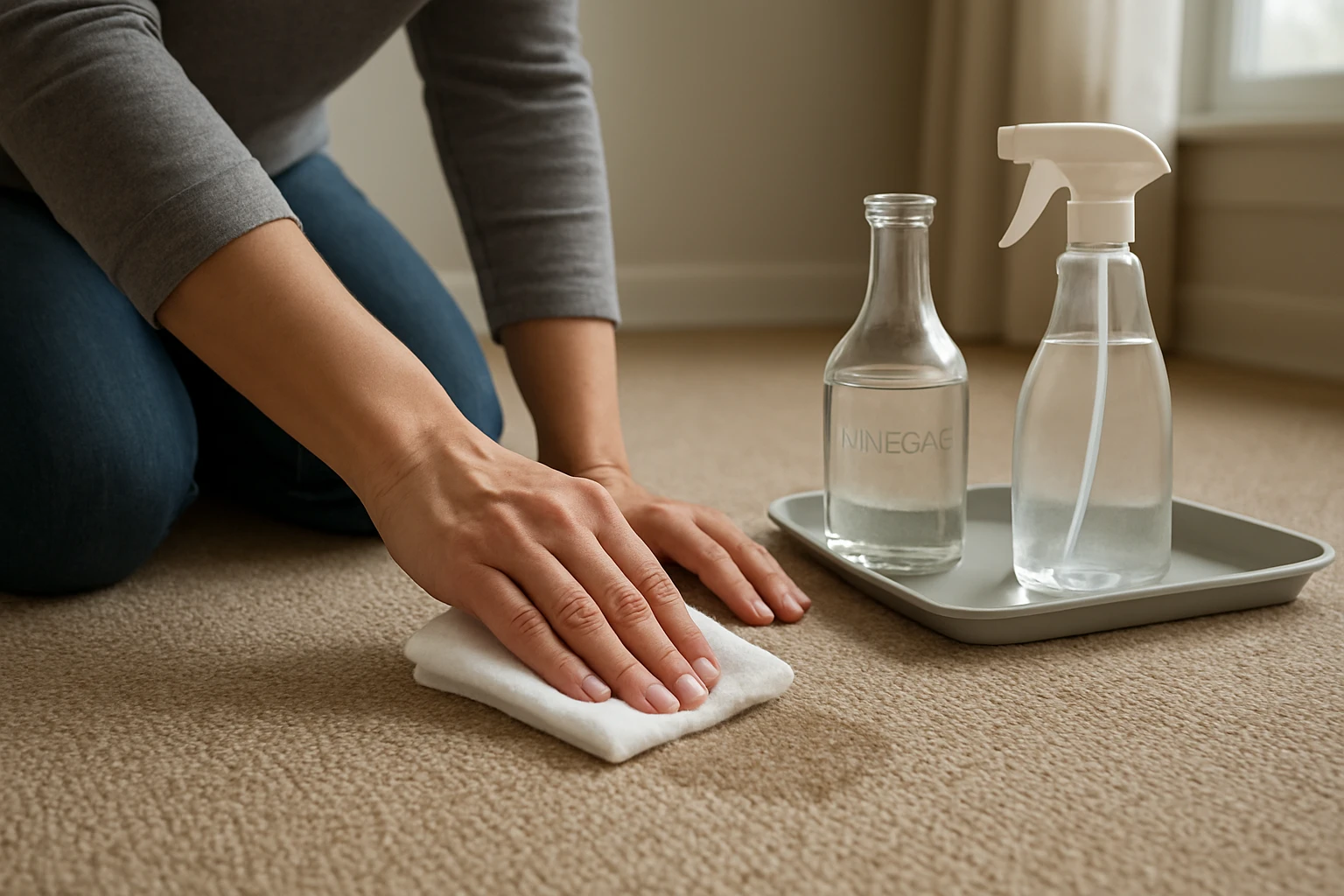
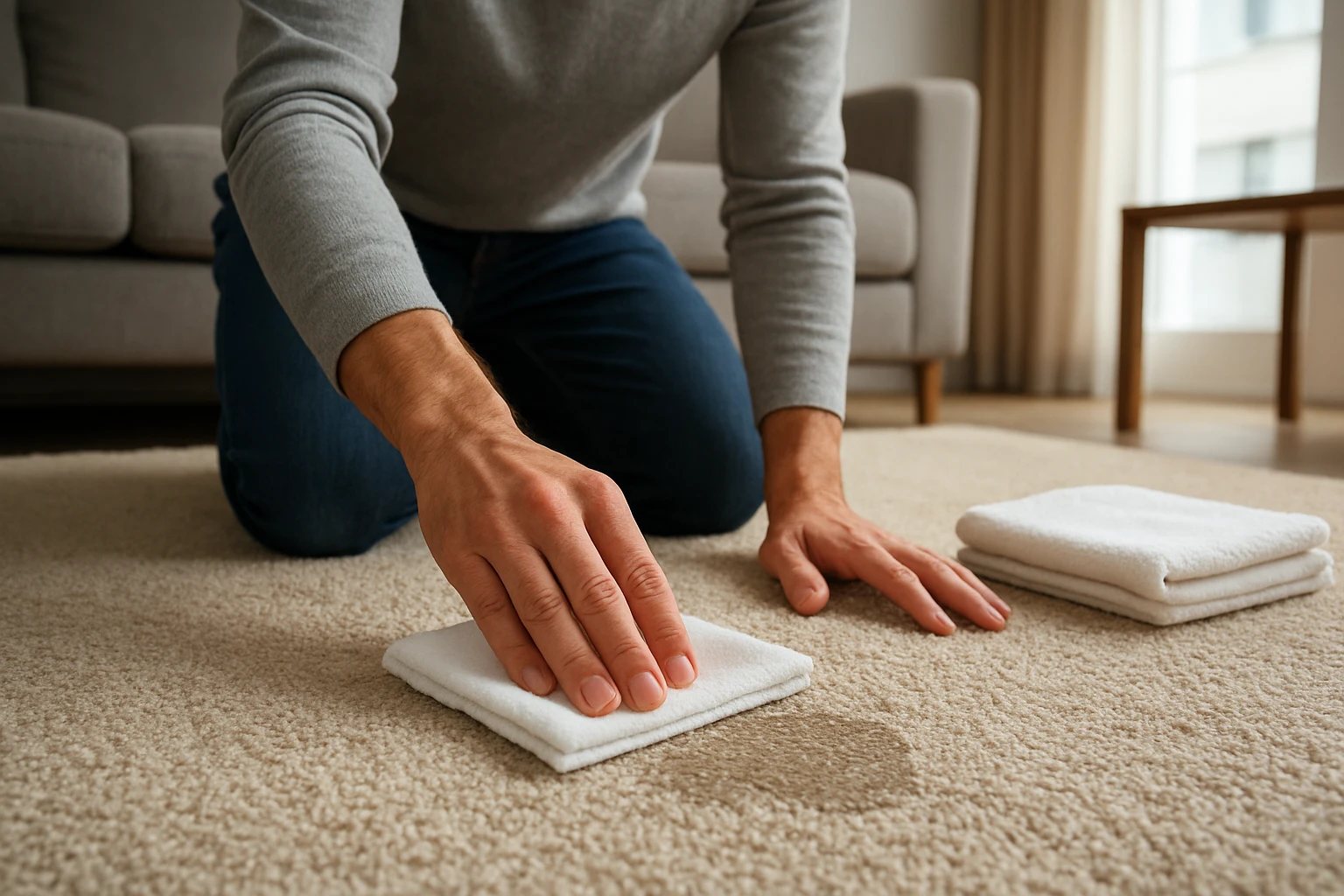
For a fresh spill, follow this order unless the carpet maker gives different instructions:
- Lift solid matter gently with a spoon, without pushing it into the pile.
- Blot liquid with a clean white cloth, working from the outside towards the centre.
- Use only a small amount of an approved wool-safe cleaner, tested first in a hidden spot.
- Blot away residue as directed, and allow the area to dry fully before normal use.
Rubbing can roughen the surface and spread the mark. Bleach and strong alkaline cleaners can damage wool, while too much water can cause browning, shrinkage, or problems in the backing and underlay.
Coffee, wine, and pet accidents need prompt attention because they may leave lasting colour or odour. For a large spill or urine that has reached the underlay, surface cleaning alone may not solve the problem.
Choose a Cleaner Who Understands Wool
Wool carpet does not always need dry cleaning. Many wool carpets can be cleaned using hot water extraction if the manufacturer allows it and the cleaner controls moisture, cleaning products, and drying.
Before booking, ask how the cleaner will avoid soaking the carpet and how the room will be dried. In humid weather, leaving windows open may not help, so controlled airflow and air conditioning may be needed.
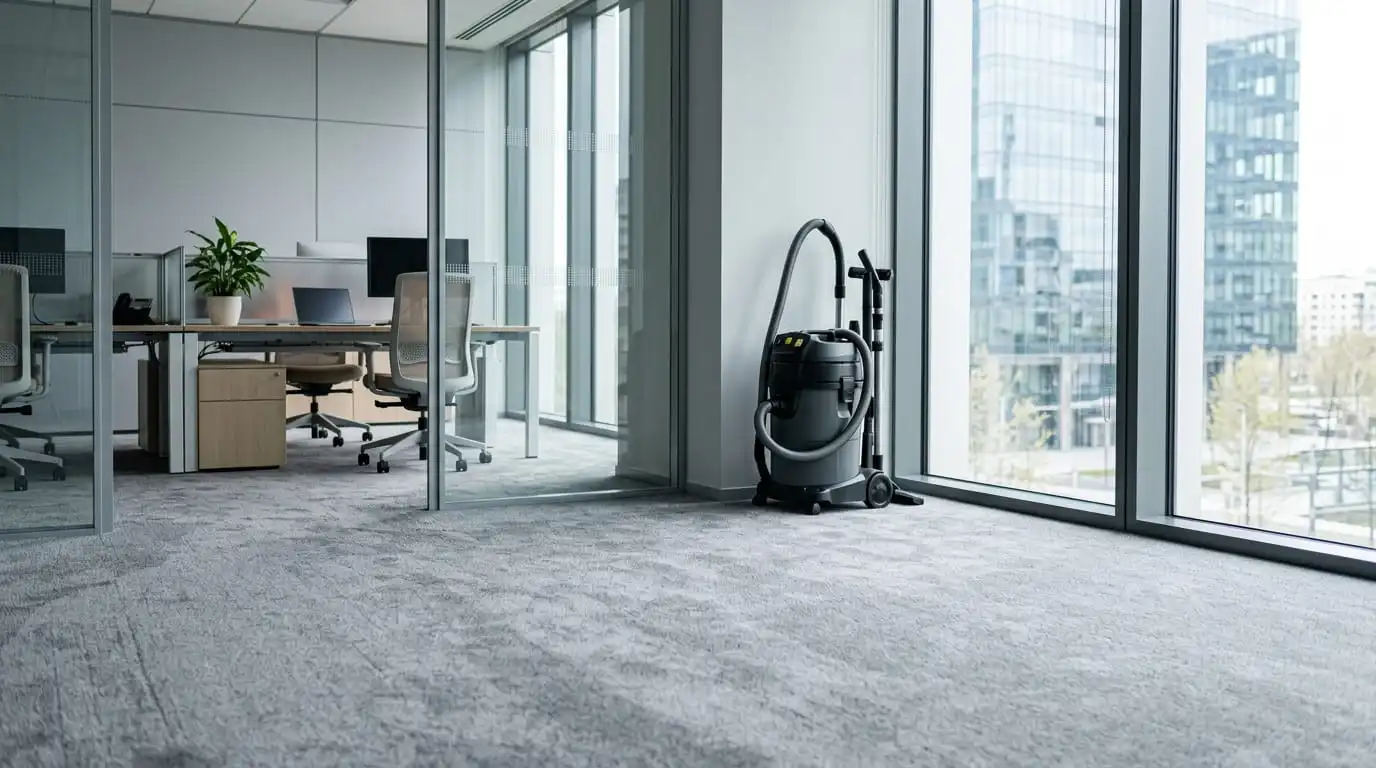
For a workplace, these steps fit into a wider plan for maintaining office carpets and extending their lifespan. Cleaning frequency should reflect foot traffic and dirt levels, not just a fixed annual date.
Where Is Wool Carpet Worth the Extra Cost?
Wool carpet is often worth considering in bedrooms, living rooms, and suitable workspaces with low to medium foot traffic, where comfort and natural texture matter. It is less suitable where dampness, frequent spills, or easy replacement of small sections are the main concerns.
| Room or Situation | How Wool Fits | What to Check Before Buying |
|---|---|---|
| Bedroom | A good match for warmth and quiet | Feel the sample over the proposed underlay |
| Family Living Room | A good option with prompt spill care | Choose a practical colour and suitable pile |
| Stairs | Suitable only with the right product | Confirm stair rating and fitting details |
| Meeting Room | Can soften footfall and room echo | Check commercial rating and chair use |
| Desk Area With Castor Chairs | Needs careful product selection | Confirm castor-chair suitability and protection needs |
| Dining Area With Frequent Spills | Requires more care | Compare stain performance with synthetic options |
| Bathroom or Damp Basement | Usually a poor choice | Choose flooring designed for moisture instead |
In a west-facing Dubai room, test the sample beside the window as well as away from it. Strong sunlight can fade dyes over time, so ask about lightfastness, meaning resistance to colour change in light, and plan suitable window shading.
Compare the Installed Price, Not Just the Carpet Price
Wool usually costs more upfront than entry-level synthetic carpet, but a useful quote must include more than the material price. Ask for carpet, underlay, fitting, removal of the old floor, thresholds, and any required floor preparation to be shown separately, with VAT made clear.
For example, if one carpet costs AED 50 more per square metre than another, a measured floor area of 20 square metres creates an AED 1,000 material difference before waste and other charges. This is a budget example, not a supplier quote, and you may need to order more carpet because rolls come in fixed widths.
A common mistake is to calculate the order from room area alone. Seams, pattern matching, and roll direction affect waste, so ask for a fitting plan before approving the amount.
Check the Details Before You Order
Take a sample home and view it in daylight and evening light, then ask the supplier to confirm the fibre content, intended use, cleaning method, and underlay requirements in writing.
For made-to-size flooring, read the returns and refunds policy before cutting is approved, since cut material may have different return conditions. Check the delivery policy before arranging furniture removal, and review the terms and conditions to confirm what the order and fitting work include.
Choose wool when its comfort, natural feel, and ability to spring back suit how you use the room. Choose another material when frequent wet spills, damp conditions, or heavy use of wheeled chairs would make wool harder to care for.
Frequently Asked Questions
Is Wool Carpet Suitable for People with Asthma or Allergies?
Wool carpet is not automatically better for everyone with asthma or allergies. Carpet can hold dust and other allergens until they are removed, so cleaning, ventilation, and the person’s triggers matter more than a natural-fibre label. Ask for product emissions information, use a suitable filtered vacuum, and seek medical advice if symptoms are severe.
Will a New Wool Carpet Shed?
A new wool carpet may shed loose fibres, especially if it has a cut pile. This often reduces with regular vacuuming, but the amount depends on the yarn and construction. Follow the recommended vacuum setting, and contact the supplier if shedding stays heavy, bald patches appear, or whole tufts pull out.
Can Carpet Moths Damage Wool Carpet?
Carpet moth larvae can damage wool because they feed on animal fibres. Quiet areas beneath furniture and along room edges can be vulnerable when dust and hair collect there. Vacuum these areas regularly, ask whether the carpet has a moth-resistance treatment, and get pest advice if you find larvae, webbing, or unexplained bare patches.
Can Wool Carpet Be Fitted Over Underfloor Heating?
Wool carpet can be fitted over some underfloor heating systems if the carpet, underlay, and heating maker all allow it. The combined thermal resistance must stay within the system’s limit so enough heat reaches the room. Ask the installer to check the full floor build-up rather than judging suitability from carpet thickness alone.
Does Wool Carpet Make a Room Smell?
Wool carpet can have a mild natural smell, which may be more noticeable when the air is humid. Backing, adhesives, and underlay can also contribute to the smell after fitting. Ventilate as the supplier advises, and investigate a persistent musty smell because it may point to trapped moisture rather than normal wool odour.