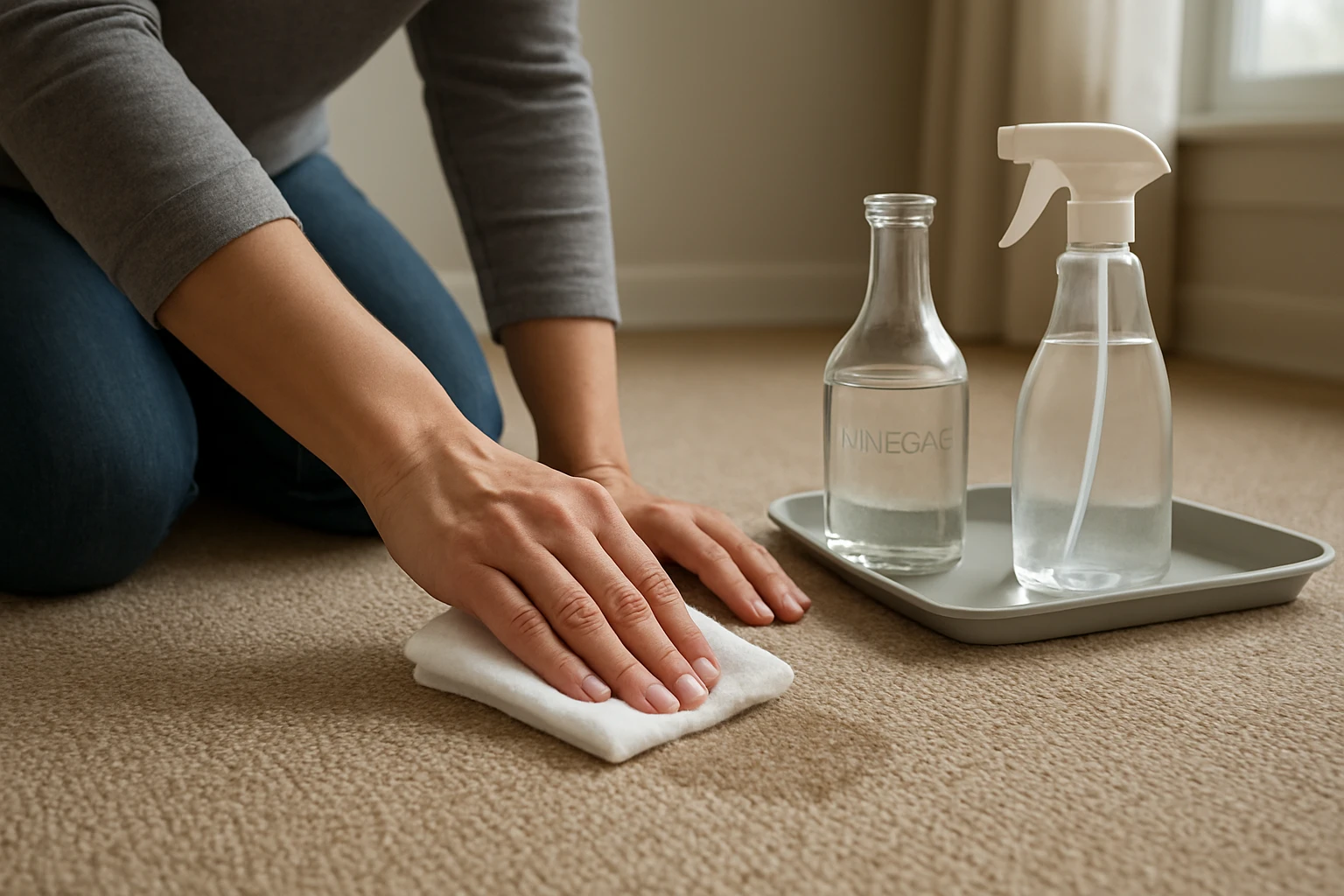

To clean carpets with vinegar, first check that the carpet maker allows it, then test a mild mix of 1 tablespoon of plain white vinegar in 1 cup of cool water on a hidden spot. If the test dries without any change, dampen a white cloth with a little of the mix and blot the stain from the outside inward. Blot again with a separate cloth dampened with plain water, then dry the spot fully. Use vinegar only for small spots on suitable carpets, not as a whole-carpet cleaner, disinfectant, or treatment for soaked-in pet urine.
Is Vinegar Safe for Your Carpet?
Vinegar is not safe for every carpet, and the care instructions matter more than a homemade cleaning recipe. Even if your carpet has synthetic fibers, its dyes, backing, glue, or protective finish may need a different cleaner.
This guide from Dubai Office Carpet focuses on careful spot cleaning rather than soaking or washing an entire floor. Before you start, check the carpet label and care sheet, and review the product warranty for any cleaning rules that apply to your purchase.
| Carpet Type or Condition | Should You Use Vinegar? | Better First Step |
|---|---|---|
| Nylon, polyester, or polypropylene carpet | Only if the maker permits it and a hidden test passes | Blot with plain water first, then follow the care sheet |
| Wool carpet or wool blend | Do not assume a homemade vinegar mix is suitable | Use a wool-safe product approved for the carpet |
| Sisal, jute, or seagrass | Avoid wet vinegar cleaning | Follow the maker’s dry or low-moisture care method |
| Silk, viscose, antique, or handmade rug | Avoid DIY vinegar treatment | Ask a rug specialist to identify the fiber and stain |
| Carpet with loose seams or damaged backing | Avoid adding moisture | Arrange a check before cleaning |
| Carpet with unknown fibers or dyes | Do not use vinegar until identified | Find the product details or ask a carpet cleaner |
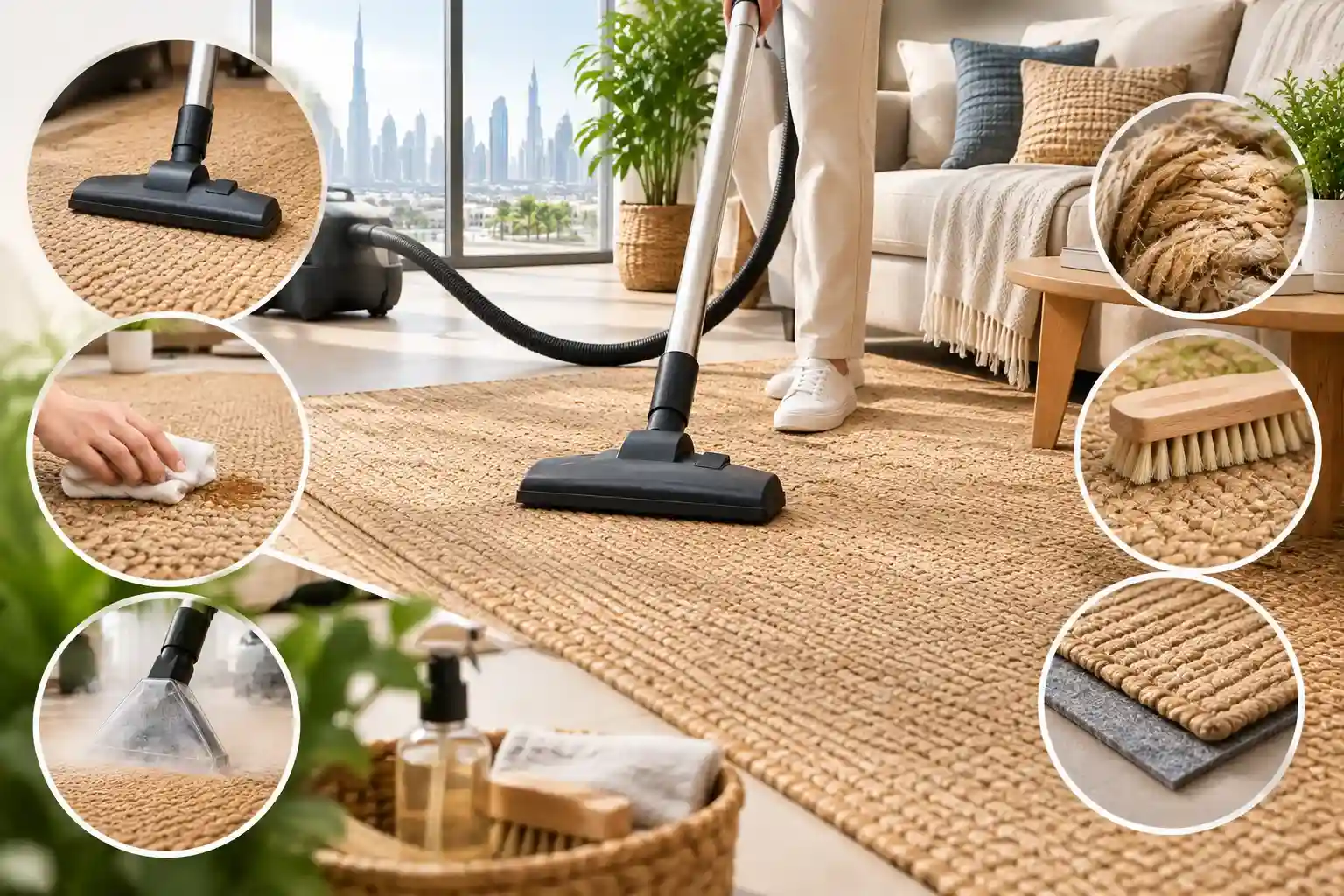
Natural plant fibers can develop water marks, shrink, or change color when wet. If you have sisal flooring, follow the separate advice on how to clean and maintain sisal carpets rather than using the method below.
Vinegar is a weak acid, not a detergent. It may help loosen some light marks or alkaline residue, but it does not lift grease well, remove deep dirt, or solve every odor problem. Often, plain water and careful blotting are enough for a fresh spill, so try that before adding anything else.
What Vinegar Mix Should You Use?
If your carpet maker permits vinegar, start with 1 tablespoon of plain white vinegar in 1 cup of cool water. This is a mild starting mix for a small spot, not a formula proven safe for every carpet.

Use ordinary white vinegar labeled around 5% acidity. Do not use concentrated cleaning vinegar, apple cider vinegar, balsamic vinegar, or colored vinegar instead. Their strength or added color can create new problems.
| Item | Amount or Type | Why It Matters |
|---|---|---|
| Plain white vinegar | 1 tablespoon, about 15 ml | Keeps the starting solution mild |
| Cool water | 1 cup, about 240 ml | Dilutes the vinegar and limits heat-related stain problems |
| White cleaning cloths | Several clean, absorbent cloths | Avoids dye transfer and makes lifted dirt easier to see |
| Small bowl | Enough to hold the mix | Lets you dampen the cloth without spraying the floor |
| Dry towel | Clean and colorfast | Absorbs moisture after cleaning |
| Fan | Optional, used safely nearby | Helps air move across the damp spot |
A common online recipe uses equal parts vinegar and water. Do not assume that stronger mix is safe, because more acid does not mean better stain removal. It may also be unsuitable for the carpet finish or backing.
Make only a small amount, and do not add dish soap, fragrance, or essential oils. Each extra ingredient can leave residue that is harder to remove and make the next cleaning step more difficult.
How to Clean a Carpet Spot with Vinegar
To clean a small carpet spot, lift loose material, test the solution, and blot with very little moisture. The aim is to lift the spill into a cloth without pushing it deeper into the backing.

- Remove loose material first. Lift solid food with a spoon, working gently so it does not spread. For a dry mark, vacuum loose grit before wet cleaning, but never use a standard dry vacuum on a wet spill.
- Blot fresh liquid with a dry white cloth. Press and lift rather than rub, and move to a clean part of the cloth as it absorbs the spill. Keep going while liquid still transfers to the cloth.
- Try plain cool water. Lightly dampen a clean cloth and blot the mark. If the stain keeps lifting, continue with water rather than switching to vinegar.
- Test the vinegar mix in a hidden spot. Choose an area of the same carpet, such as a corner behind furniture. Apply a little with a cloth, blot with a separate water-dampened cloth, and let it dry fully before checking for color change, stiffness, or a visible ring. Allow up to 24 hours for a careful test.
- Dampen a cloth with the tested mix. Wring it out so it does not drip, then blot the stain from its outer edge toward the center. Never pour the bowl onto the carpet or spray until the pile is wet through.
- Check after each pass. Use a fresh part of the cloth so lifted dirt does not go back onto the carpet. Stop if carpet dye appears on the cloth, the mark spreads, or the pile changes texture.
- Remove the remaining solution. Blot with another cloth lightly dampened with plain water, then press with a dry towel. This gentle rinse removes cleaner without flooding the area.
- Dry the spot fully. Keep people and pets off the area, move air across it, and vacuum only when the carpet is completely dry.
For example, a small juice spill should need a damp corner of a cloth, not a cup of liquid poured into the pile. If the stain is no longer transferring to the cloth, repeated soaking is unlikely to help and can leave a larger damp patch.
If you cannot wait for the hidden test to dry, blot the fresh spill with a dry cloth and follow the carpet maker’s emergency cleaning instructions instead. A rushed test cannot show what the treated fibers will look like once dry.
Which Stains Need Something Other Than Vinegar?
Vinegar is a poor choice for grease, deep pet urine, and stains that need a specific treatment. Match the cleaner to the spill rather than using the same homemade mix on every mark.
| Spill or Problem | Where Vinegar Fits | Better Approach |
|---|---|---|
| Fresh juice or a light water-based spill | A possible second step if plain water fails and the carpet permits it | Blot first, then use the carpet maker’s approved spot cleaner if needed |
| Coffee, tea, or red wine | May fail to remove the color | Use a carpet-approved stain treatment suited to the spill |
| Cooking oil, butter, or greasy food | Vinegar does not remove grease well | Use a carpet-safe grease treatment according to its label |
| Pet urine | Does not reliably break down the full residue, especially below the pile | Use a compatible enzyme cleaner and assess how deeply urine has soaked in |
| Mud | Wet cleaning too soon can spread fine soil | Let ordinary mud dry, vacuum carefully, then treat any remaining mark |
| Ink or paint | A general vinegar mix may spread the stain or fail completely | Identify the ink or paint and get product-specific advice |
| Musty odor or visible mold | Vinegar is not a carpet mold-removal plan | Find the moisture source and get suitable professional help |
An enzyme cleaner contains ingredients that help break down certain organic residues, such as those left by pet accidents. The cleaner still needs to be safe for your carpet, and the label may tell you to leave it on for a set time before blotting or extraction.
Do not apply vinegar right before or after an enzyme cleaner unless the product maker allows it. Mixing treatments can change how they work, and you may not know which residue remains in the carpet.
A urine smell that returns often means the source is below the visible surface. Cleaning only the tips of the fibers cannot remove urine held in the backing or underlay, so you may need help to find and treat the source.
Avoid These Vinegar Cleaning Mistakes
The main risks are using too much liquid, mixing products, and treating vinegar as a deep cleaner. A mild solution can still cause trouble if it reaches seams, glue, or the layer beneath the carpet.
Do Not Mix Vinegar with Bleach or Other Cleaners
Never mix vinegar with bleach, because the combination can release dangerous chlorine gas. Keep vinegar separate from ammonia-based cleaners, peroxide products, disinfectants, and stain removers unless the product label specifically directs their use together.
If you have already mixed products and notice strong fumes, stop cleaning and leave the area. Get fresh air and contact local emergency or poison advice services if anyone has breathing trouble, eye irritation, or other symptoms.
Skip the Baking Soda and Vinegar Foam
Baking soda and vinegar react with each other, and the fizz is not proof that dirt is leaving the carpet. The reaction uses up much of the acid and baking soda, while loose powder and moisture can remain trapped in the pile.
Do not scrub a paste into the carpet or try to vacuum damp baking soda with a standard dry vacuum. A carpet-approved cleaner is easier to apply in small amounts and comes with instructions for removing its residue.
Do Not Put Vinegar in a Carpet Cleaning Machine Unless Allowed
Use only a solution that both the carpet maker and machine maker permit. A homemade vinegar mix may go against their care instructions, and it should not replace the detergent designed for the machine.
Also, avoid spraying diluted vinegar across an entire room to freshen it. That spreads moisture without removing the dirt or odor source. Spot cleaning is meant for small marks, not whole-room cleaning.
How to Dry the Carpet and Know When to Stop
Dry the carpet with absorbent towels and moving air, and stop DIY cleaning if the stain spreads, returns, or stays wet beneath the surface. A dry-looking top layer does not always mean the backing is dry.

Press a clean, dry towel onto the spot, replace it when damp, and use a fan to move air across the surface. Keep electrical equipment away from moisture, and do not use a hair dryer or strong direct heat to rush the job.
In a Dubai home or office, opening a window is not always the best drying method. If outdoor air is humid, air conditioning or a dehumidifier used with a fan may dry the area better than letting that moisture inside.
A lightly damp spot should become steadily drier over the next few hours. If it is still damp the next day, smells musty, or feels wet when pressed firmly with a dry towel, stop adding liquid and arrange help.
A brown ring or a stain that returns after drying can be a sign of wicking. This happens when moisture carries dirt back up from deeper in the carpet. Repeating the same wet treatment may enlarge the mark rather than remove it.
Seek professional advice when a spill has soaked a large area, urine has reached the underlay, a rug has dyes that bleed, or the carpet starts to lift or ripple. For everyday care between spills, follow a regular routine of vacuuming, using entry mats, and blotting spills promptly, as covered in this guide to maintaining office carpets and extending their lifespan.
For a small spot on a suitable carpet, the safest vinegar method stays simple: check the care instructions, test a mild mix, use very little liquid, and dry the carpet fully. If plain water is working, there is no reason to add vinegar.
Frequently Asked Questions
Can Vinegar Disinfect a Carpet After Someone Has Been Ill?
Household vinegar is not a reliable carpet disinfectant. Cleaning a visible mark and killing disease-causing germs are separate jobs, so use a product whose label specifically permits the required use on carpet or soft surfaces. Follow its contact time and drying instructions, and check that it suits the carpet.
Is Diluted Vinegar Safe to Use Around Cats and Dogs?
Keep cats and dogs away from vinegar solution and the treated carpet until it is fully dry. Do not let pets drink the mixture or lick damp fibers, and store the bottle out of reach. Ask your vet for advice if a pet swallows cleaner or develops irritation after contact.
Can I Use Vinegar to Clean a Carpet Under a Desk or Metal Furniture?
Move furniture away before spot cleaning, because damp carpet can pick up rust or furniture stain from the feet. Do not drag heavy furniture across wet pile, and wait until the area is fully dry before putting it back. If moving the item is unsafe, get help rather than soaking around its legs.
Why Does My Carpet Still Smell Like Vinegar After It Dries?
A lingering vinegar smell can mean the solution was too strong, too much was used, or the carpet is not fully dry below the surface. Improve airflow and check for trapped moisture rather than adding fragrance. If the smell persists, ask a carpet cleaner about controlled rinsing and extraction.
Can I Add Essential Oils to Vinegar Carpet Cleaner?
Do not add essential oils to a vinegar carpet cleaner, because the oils can leave marks or residue and may be unsuitable around pets. Fragrance also hides odors without removing their source. Keep any permitted spot-cleaning mix plain, and deal with the spill or trapped moisture that caused the smell.