When selecting an office floor, it’s not just about choosing the floor that looks great in the sample. The floor must be able to support office chairs, pedestrian foot traffic, spills, cleaning, noise and the stresses of a chaotic workspace environment.
The two options that come to mind when it comes to office flooring are office carpet and vinyl flooring.
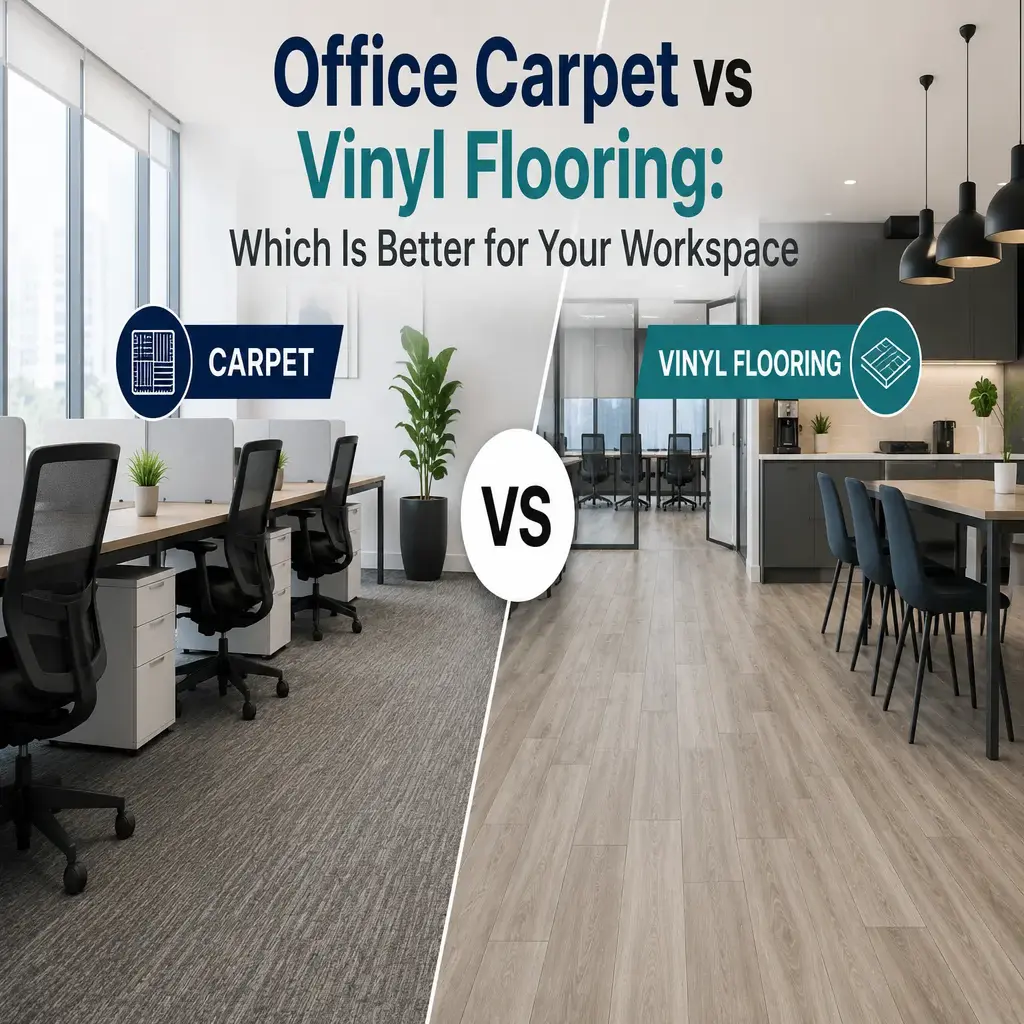
They can both be effective and they can tackle different issues. Carpet is softer, quieter, and will make the workplace more comfortable to work, while vinyl is hard, smooth and easy to clean and works well with spills.
Thus, what should be done?
The short answer is: it depends on the use of your office, the location in which the flooring is going to be put in place, and what is important to your business.
Let’s take them, one by one.
Office Carpet vs Vinyl Flooring at a Glance
| Factor | Office Carpet | Vinyl Flooring |
| Comfort underfoot | Excellent | Moderate |
| Noise control | Very good | Limited |
| Chair movement | Good with suitable low-pile carpet | Very good |
| Spill resistance | Depends on material and treatment | Generally very good |
| Cleaning | Regular vacuuming and spot cleaning | Easy sweeping and mopping |
| Design options | Wide range of colors and patterns | Wide range of colors and finishes |
| Individual section replacement | Excellent with carpet tiles | Depends on flooring system |
| Warmth and softness | High | Low |
| Best suited to | Offices, meeting rooms, open workspaces | High-spill areas, utility spaces, selected commercial zones |
The table gives you the quick answer, but the right choice becomes clearer when you look at how each flooring type behaves in a real office.
What Makes an Office Carpet a Good Choice?
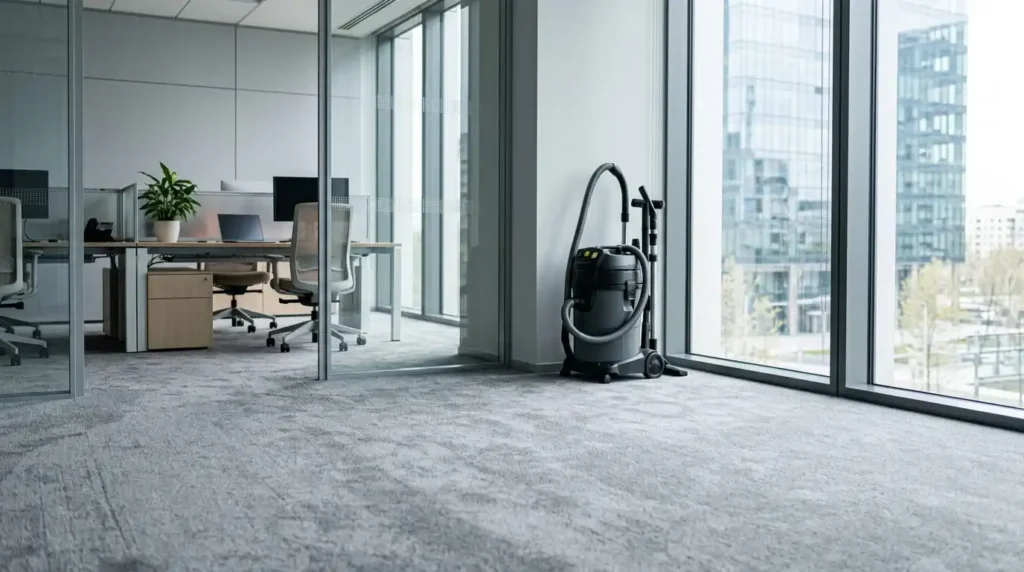
Office carpet is particularly useful when comfort and workplace acoustics are important.
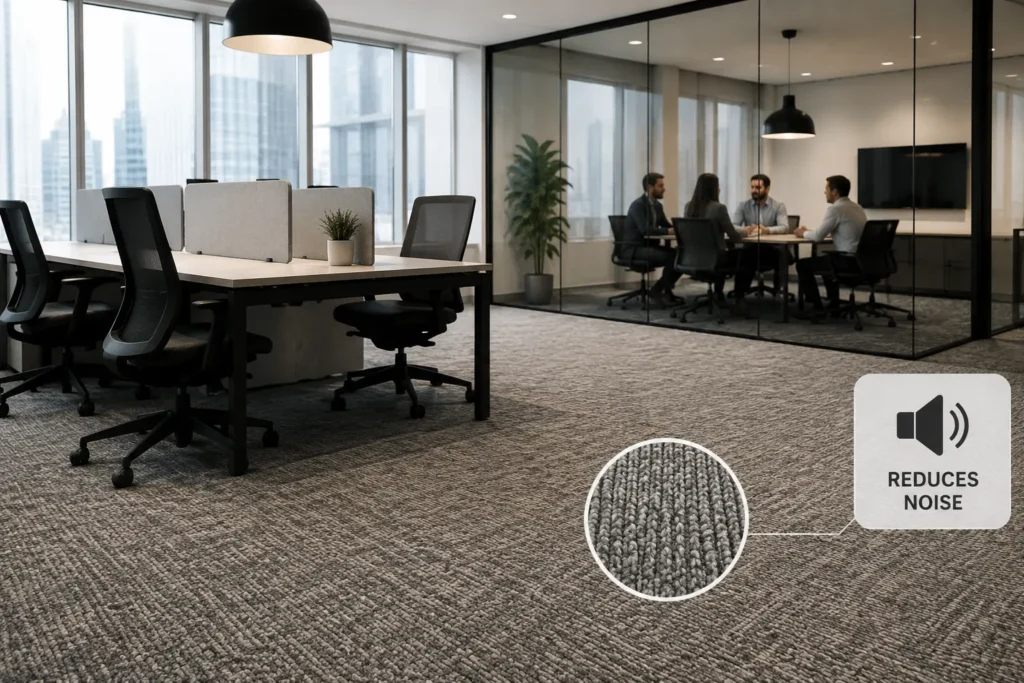
A carpeted floor absorbs some of the sound created by footsteps, conversations and moving chairs. This can be helpful in open-plan offices where several people may be working, talking and moving around at the same time.
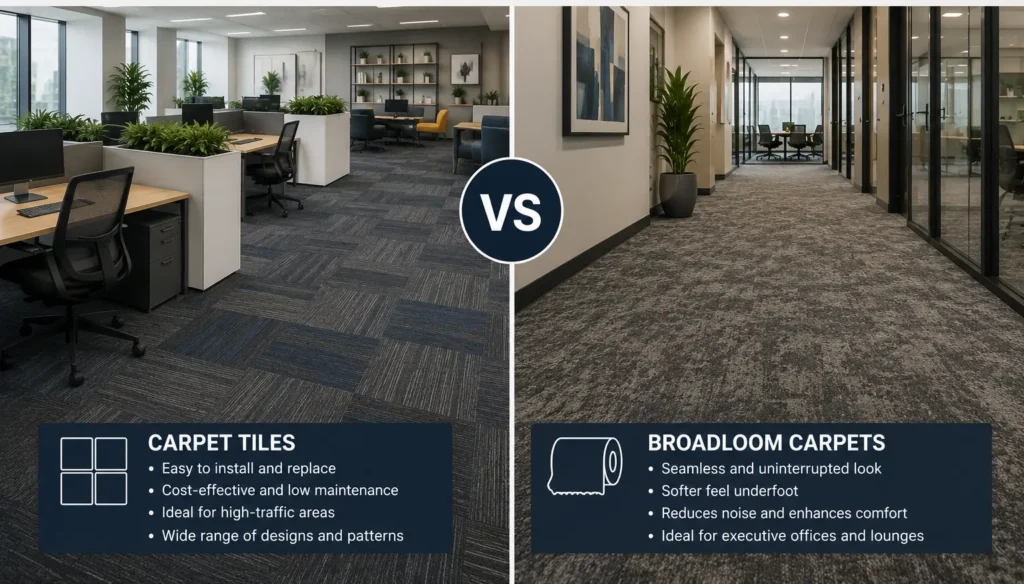
The site currently offers commercial carpet options including nylon, polypropylene, wool tiles, wall-to-wall carpets and modular carpet tiles.
1. Carpet Helps Reduce Office Noise

Noise is one of the less obvious flooring considerations.
Think about an office with hard floors, rolling chairs and people walking between desks all day. Sound can travel easily across a large open area.
Carpet provides a softer surface and can help reduce the amount of reflected sound.
This makes it worth considering for:
- Open-plan offices
- Call centres
- Meeting rooms
- Private offices
- Reception areas
- Collaborative workspaces
If acoustic comfort is a major priority, choosing the right carpet construction and underlay can make a noticeable difference. The website also offers carpet underlay options with different thickness and sound-insulation specifications.
2. It Feels More Comfortable
Employees spend many hours inside the workplace. A softer floor can make an office feel warmer and more comfortable, particularly in areas where people stand or walk frequently.
Carpet also gives an office a less clinical appearance. Neutral grey, charcoal, blue and patterned commercial carpets can create a professional setting without making the space feel overly formal.
3. Carpet Tiles Make Repairs Easier
This is one of the strongest practical advantages of carpet tiles.
Imagine a coffee spill damages one section near the pantry. With modular carpet tiles, you may only need to replace the affected tile rather than remove an entire room’s flooring.
That can be especially useful for offices where furniture is frequently rearranged or where certain areas experience more wear than others.
What Are the Advantages of Vinyl Flooring?
Vinyl takes a different approach.
Instead of providing a soft textile surface, it creates a smooth, hard-wearing floor that can be cleaned relatively easily. This makes it attractive for workplaces where spills, dirt and frequent cleaning are major concerns.
Vinyl can also work well in offices that want a wood, stone or other hard-floor appearance without using the natural material itself.
1. Vinyl Is Easy to Clean
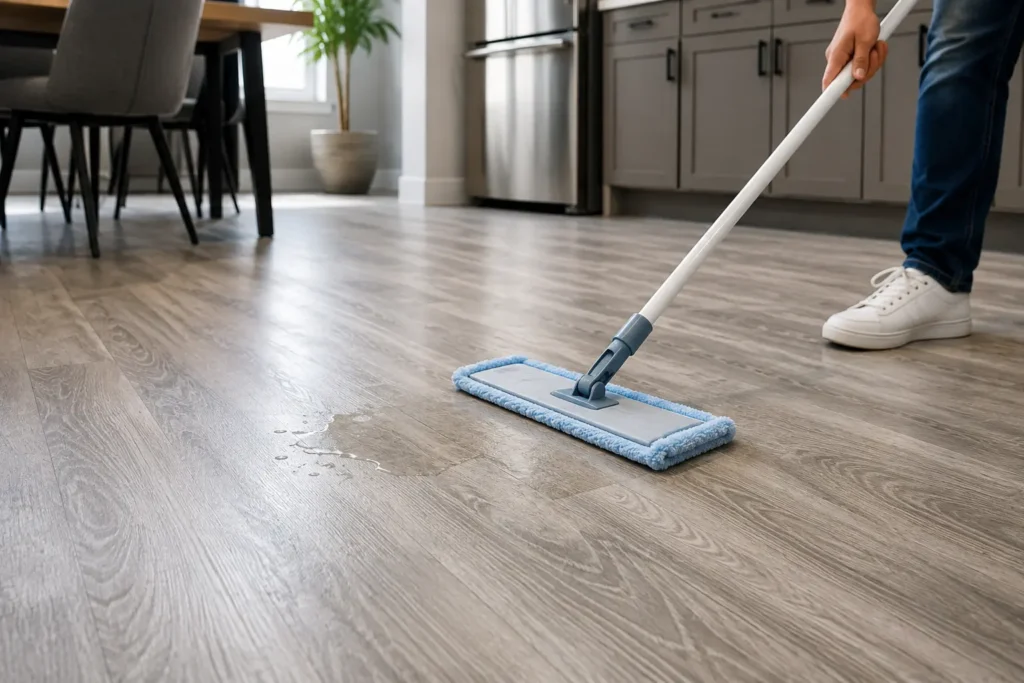
A smooth vinyl surface does not trap dirt in the same way a textile floor covering can.
For areas where employees regularly bring in drinks, food or other materials, the ability to wipe and mop the floor easily can be a major advantage.
This makes vinyl worth considering for:
- Office kitchens
- Break rooms
- Utility areas
- Corridors
- Reception areas
- Commercial spaces with frequent spills
However, easy cleaning does not mean every vinyl floor is maintenance-free. The manufacturer’s cleaning recommendations, surface finish and installation quality still matter.
2. It Handles Spills Well
If your workplace has a higher chance of liquid spills, vinyl may be the more practical option.
Coffee, water and other liquids can usually be cleaned from a smooth vinyl surface without the same concern about liquid soaking into textile fibres.
That doesn’t automatically make vinyl the better choice throughout an entire office, though. Often, the smartest solution is to use different flooring materials in different zones.
3. Vinyl Gives You a Hard-Floor Appearance
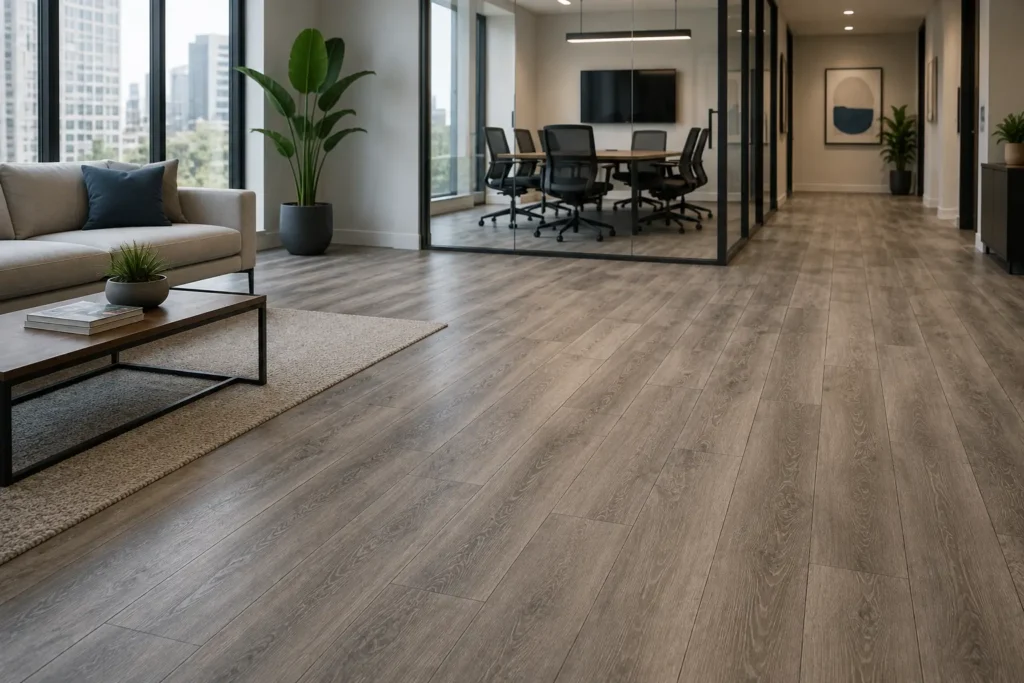
Some businesses simply prefer the appearance of a hard floor.
Vinyl can create a clean, contemporary look and can be used to visually separate areas within a workplace. For example, a business might use a hard flooring finish in a reception or pantry area and carpet in employee workstations.
Office Carpet vs Vinyl: Which Is More Comfortable?
Office carpet wins on comfort.
There is a clear difference between walking across a textile surface and walking across a hard floor for several hours.
Carpet provides cushioning underfoot and can make the room feel warmer and softer. This can be particularly useful in offices where employees regularly move between desks or spend time standing.
Vinyl is easier to clean, but it does not provide the same softness.
If comfort is one of your top priorities, commercial carpet is usually the stronger choice.
Which Flooring Is Better for Office Noise?
Again, carpet generally has the advantage.
Hard flooring surfaces can reflect sound, while carpet helps absorb some of the sound produced inside a room.
This matters more in large open offices than in small private rooms.
For example, a 10-person private office may not have the same acoustic challenge as a large open-plan workspace with dozens of desks, frequent conversations and constant chair movement.
If your office has an open layout, don’t choose flooring based on appearance alone. Consider how the floor will interact with the rest of your acoustic strategy.
Which Is Easier to Maintain?
This is where vinyl has the edge.
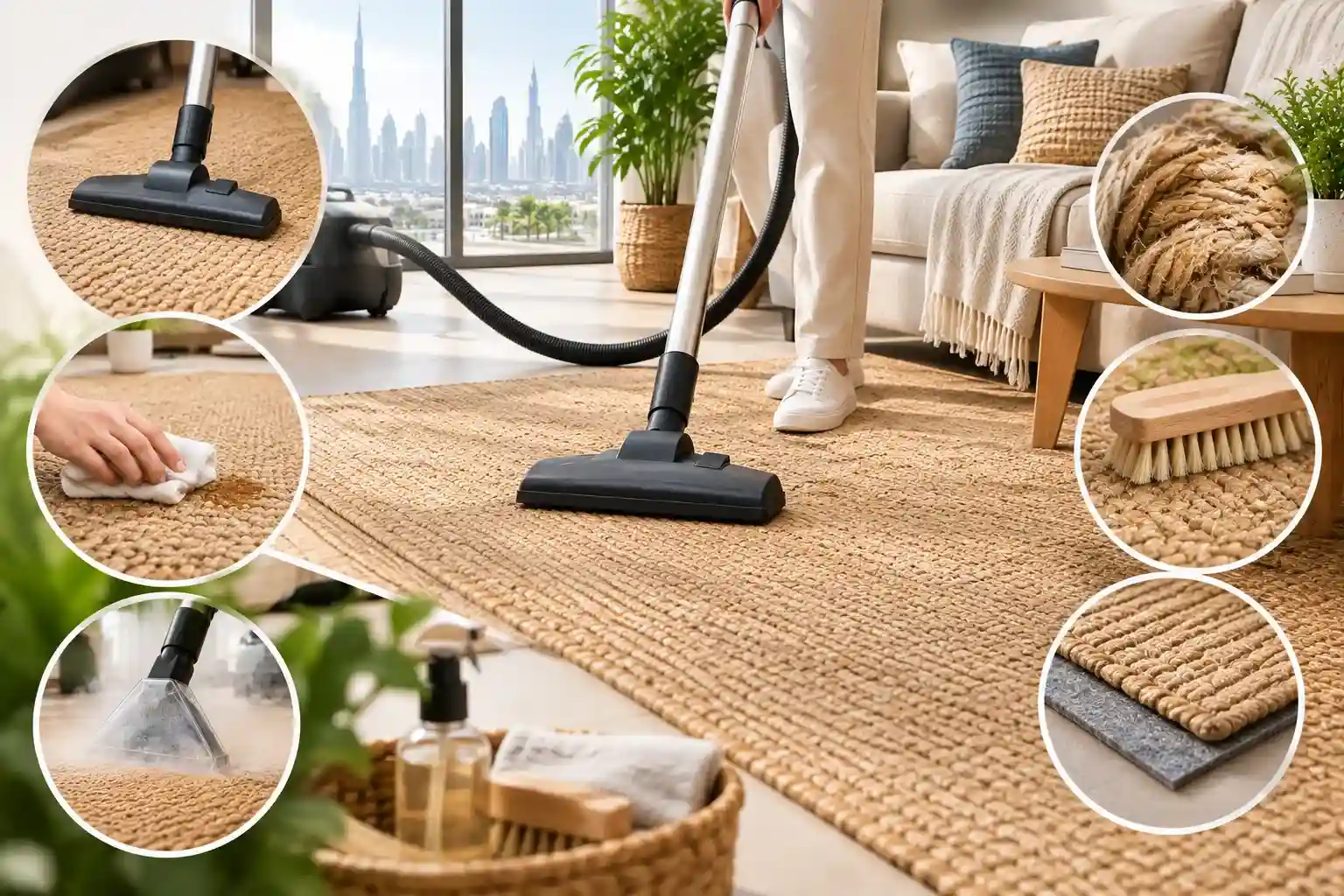
Vinyl can generally be swept, vacuumed or damp-mopped according to the flooring manufacturer’s recommendations. Carpet needs regular vacuuming and prompt attention to stains and spills.
But commercial office carpet should not be treated like a residential, high-pile carpet.
Low-pile commercial carpets are designed for regular foot traffic, and maintenance becomes much more manageable when you choose the correct material and establish a sensible cleaning routine.
For offices, maintenance should include:
- Regular vacuuming
- Prompt spill treatment
- Periodic deep cleaning
- Entrance matting where appropriate
- Replacement of heavily damaged carpet tiles when necessary
The maintenance requirement is therefore not simply carpet vs vinyl. It is also about selecting the right product for the amount of traffic your office receives.
Which Flooring Is Better for High-Traffic Offices?
Both can be suitable for high-traffic areas, but the type of traffic matters.
A busy corporate office with desks, meeting rooms and corridors can work very well with commercial carpet designed for heavy use.
The website’s current range includes commercial carpet products described for busy areas and heavy foot traffic, including options such as Cormar Primo Choice Super Quarry.
A workplace with frequent spills, deliveries, cleaning activity or exposure to moisture may be better suited to vinyl in particular zones.
The important question is not:
“Which flooring lasts longer?”
Instead, ask:
What kind of wear will this floor experience every day?
That question usually leads to a better flooring decision.
Carpet Tiles vs Vinyl: A More Useful Comparison
If you’re comparing flooring for an actual office project, it can be more useful to compare carpet tiles with vinyl rather than treating all carpets as one category.
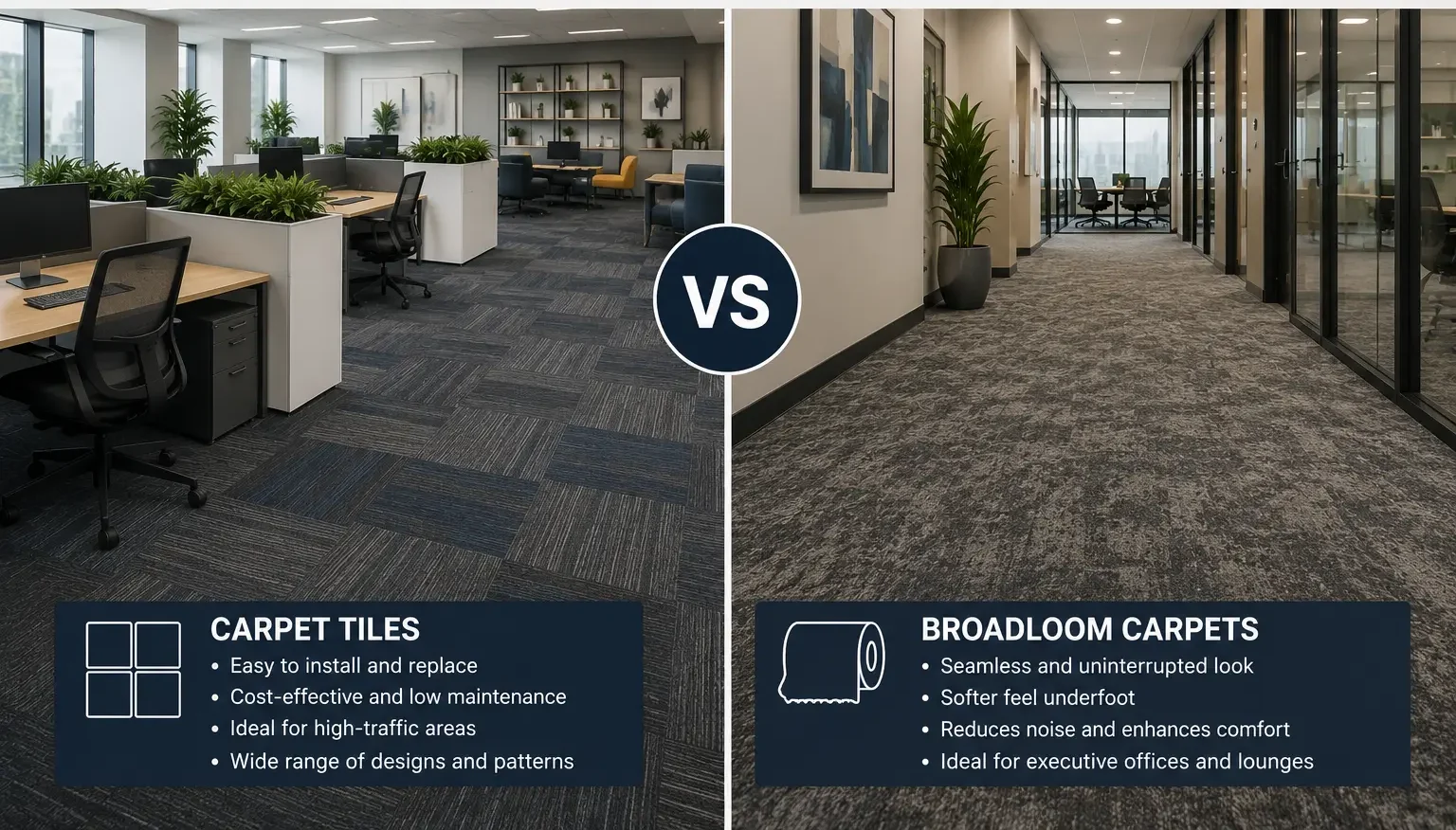
Carpet tiles offer several practical benefits for commercial spaces.
Carpet tiles can be useful when:
- Individual sections may need replacement
- The office layout changes regularly
- You want multiple colors or patterns
- You want to create visual zones
- Acoustic comfort matters
- Employee comfort is important
Vinyl may be preferable when:
- Spills are frequent
- Wet cleaning is important
- A hard-floor appearance is preferred
- The space needs a smooth, easy-clean surface
- You are flooring a pantry or utility area
This is why many commercial flooring decisions are made room by room rather than choosing one material for the entire property.
Where Should You Use Carpet in an Office?
Carpet is often a strong fit for areas where people spend long periods working.
Open-Plan Workstations
Carpet can provide a more comfortable and quieter environment around desks.
Private Offices
A soft commercial carpet can make executive or private offices feel more comfortable without looking informal.
Meeting Rooms
Carpet can help reduce the sound of conversations and chair movement, creating a quieter and more comfortable meeting room.
Reception Areas
A well-chosen carpet can provide a professional first impression while adding warmth to the entrance.
Corridors
Commercial-grade carpet can work well in corridors when the selected product is appropriate for the expected traffic.
If you are considering a full floor covering, wall-to-wall office carpets can provide a consistent appearance across larger areas.
Where Does Vinyl Make More Sense?
Vinyl can be particularly useful where cleanliness and spill management are more important than softness.
Office Pantry
Food and drink spills are more likely here, making an easy-clean surface practical.
Break Room
The same logic applies to employee dining and coffee areas.
Utility Areas
Hard flooring is often more appropriate where cleaning and maintenance are frequent.
Certain Reception Areas
If your design calls for a modern hard-floor appearance, vinyl can provide that look while remaining practical for commercial use.
What About Dubai’s Climate?
For offices in Dubai, flooring should be selected with the whole indoor environment in mind.
Air conditioning keeps most modern offices controlled throughout the day, but entrances can still experience dust, outdoor moisture and heavy foot traffic from people coming in and out.
A good entrance system matters regardless of whether you choose carpet or vinyl.
For carpeted offices, entrance mats can help reduce the amount of dirt brought onto the carpet. For vinyl, regular cleaning is still necessary to prevent dust and grit from causing surface wear over time.
The location of your office also matters. A ground-floor retail-style workplace with constant outside traffic has different flooring needs from a private office on a high floor in a commercial tower.
Should You Choose Carpet or Vinyl for Your Whole Office?
Not necessarily.
This is one of the biggest mistakes businesses make when planning commercial flooring.
You don’t have to use one flooring type everywhere.
A practical office could use:
Carpet:
Workstations, private offices, meeting rooms and quiet areas.
Vinyl:
Pantries, break rooms, utility areas and selected high-spill zones.
This approach lets each material do the job it is best suited for.
It can also make the office more visually interesting. Changes in flooring can naturally define different areas without putting up walls.
7 Questions to Ask Before Choosing Your Office Flooring
Before ordering anything, consider these questions:
- How many people use the office every day?
- Where does most of the foot traffic occur?
- Are drinks and food regularly consumed in the area?
- Is noise control important?
- Will office furniture be moved frequently?
- How often can your cleaning team maintain the floor?
- Do you expect to change the office layout in the future?
Your answers will usually make the decision much easier.
If noise and comfort are high priorities, carpet deserves serious consideration.
If easy cleaning and spill resistance matter more, vinyl may be the better fit for particular areas.
So, Which Is Better: Office Carpet or Vinyl Flooring?
There isn’t one winner for every workspace.
Choose office carpet if you prioritise comfort, acoustic performance, warmth and a professional workplace atmosphere. Carpet tiles are particularly practical when individual sections may need replacing or when you want flexibility in design.
Choose vinyl if easy cleaning, spill management and a smooth hard-floor finish are your main priorities.
And if your office has different requirements from room to room, don’t be afraid to combine both.
For many workplaces, the best flooring plan isn’t carpet vs vinyl. It is carpet where people work and vinyl where spills and intensive cleaning are more likely.
That approach gives you a floor that works with the way your office actually operates.
Need Help Choosing Office Flooring in Dubai?
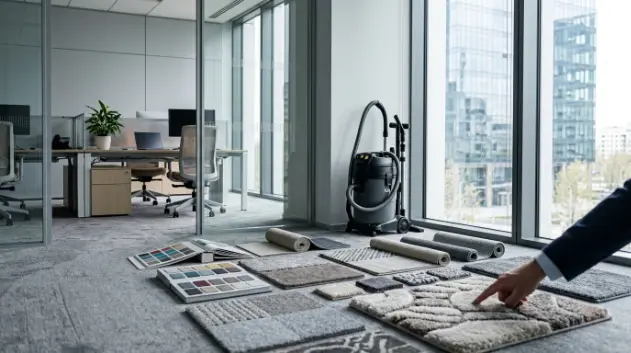
Before selecting a material, consider the office layout, traffic level, furniture, cleaning routine and acoustic requirements. A sample can also look very different under your actual office lighting than it does on a screen.
Dubai Office Carpets provides office carpet options including carpet tiles, wall-to-wall carpets and acoustic-focused solutions, along with measurement and installation services.
Frequently Asked Questions
Is carpet or vinyl better for an open-plan office?
Carpet is often the better choice when reducing reflected noise and improving underfoot comfort are important. Vinyl can still work, particularly where easy cleaning is the priority.
Are carpet tiles suitable for busy offices?
Yes, commercial carpet tiles can be a practical option for busy offices. One major advantage is that damaged individual tiles can potentially be replaced without changing the entire floor.
Is vinyl easier to clean than office carpet?
Generally, yes. Vinyl provides a smooth surface that can be cleaned using appropriate sweeping and mopping methods. Carpet requires regular vacuuming and prompt treatment of spills.
Can carpet and vinyl be used together?
Yes. Using different flooring materials in different areas can be a sensible commercial flooring strategy. For example, carpet can be used in work areas while vinyl is used in pantries or utility spaces.
What type of carpet is best for an office?
The right option depends on traffic, office layout, maintenance requirements, appearance and budget. Low-pile commercial carpets and carpet tiles are commonly considered for workspaces because they are designed around commercial use rather than residential comfort alone.
Is carpet good for office meeting rooms?
It can be. Carpet provides a softer surface and can help reduce sound reflection from footsteps and chair movement, making it a practical option for many meeting rooms.
Should I choose one flooring type for the entire office?
Not always. Different rooms have different demands. A combination of carpet and vinyl can sometimes provide a more practical result than using one material throughout the building.