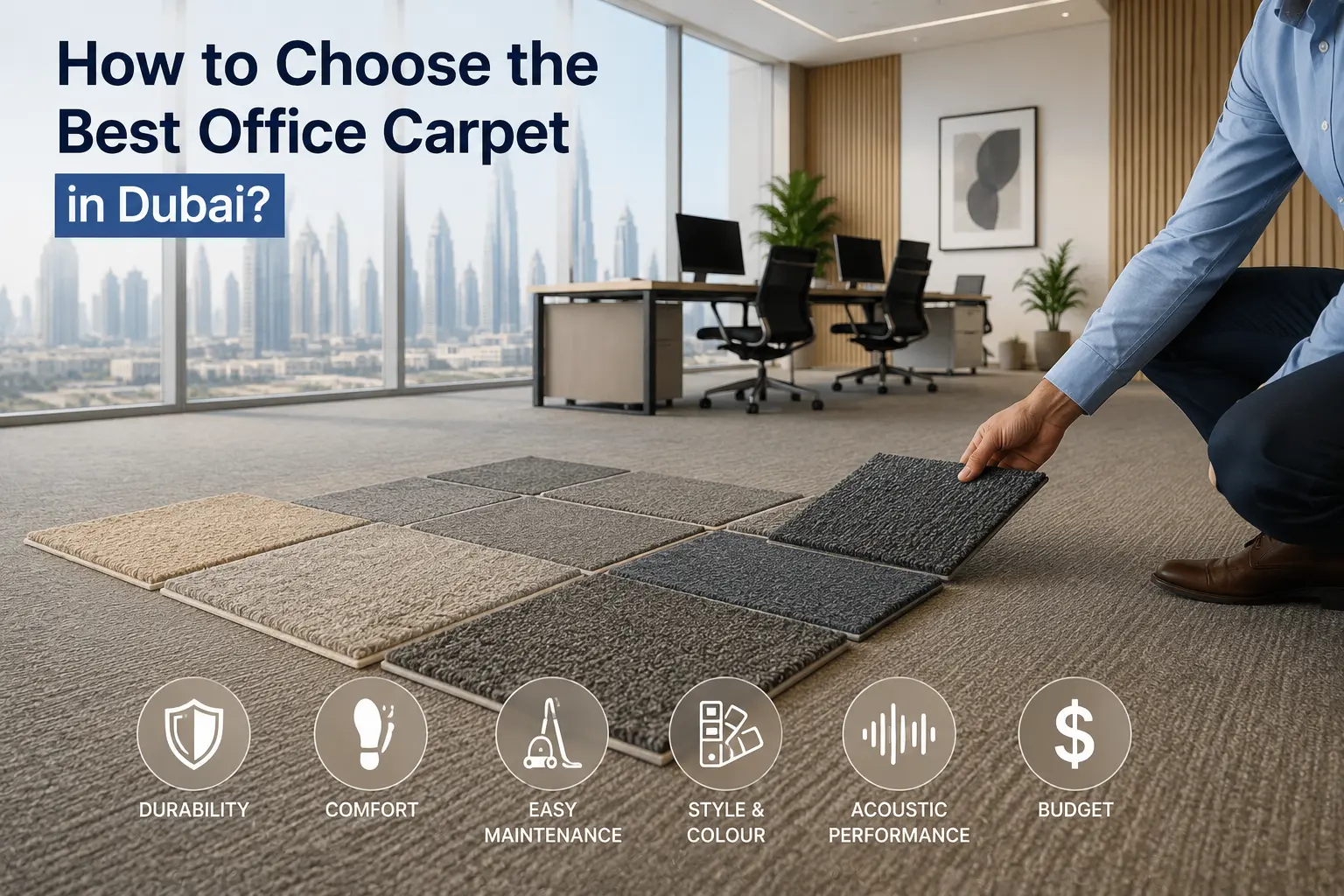
Selecting an office carpet is not only about picking a colour that is matching with furniture. Not only does the right carpet have to handle foot traffic, rolling office chairs, coffee spills, cleaning, meetings, and other requirements of a busy office, it also has to meet these daily needs. Meanwhile, it must make the office warm, professional and cohesive to your brand.
Which is why, the best office carpet in Dubai varies from place to place.
A small private office can be fitted with a softer, more luxurious carpet, whereas a hectic open-plan office can require a harder-wearing modular carpet tile that is simple to replace. A reception area has other needs, of course.
Choosing flooring for a new office or an office that is carpetless, the following guide will help you make an informed decision, rather than opting for a floor simply because of its appearance.
Begin With How Your Office is really Used
When considering colours, patterns or samples, consider what occurs in the space each day
Ask yourself:
- What is the number of people who use the office?
- What are the hot spots?
- Are office chairs fitted with wheels used by staff?
- Do you have areas in need of a more elegant finish, such as meeting rooms or reception areas?
- Does the Office have an open layout or are there smaller rooms?
- Will furniture be frequently moved?
- Is there a regular intake of food and beverages in the workplace?
- Will you be using the carpet for several years?
The wear on an office in a hotly contested commercial structure can be very different from that of a small executive suite. Generally, corridors, entranceways, pantry spaces and spaces around desks are areas that warrant more attention since they are usually used repeatedly.
If the carpet is to be used a lot, then it is better to use commercial carpet that has a construction and fibre that is appropriate for the amount of traffic. If you select a carpet just because it feels soft, you can end up with a carpet that is wearing out too quickly.
Carpet Tiles or Wall-to-Wall Carpet?
This is one of the most important decisions you will make.
Carpet Tiles

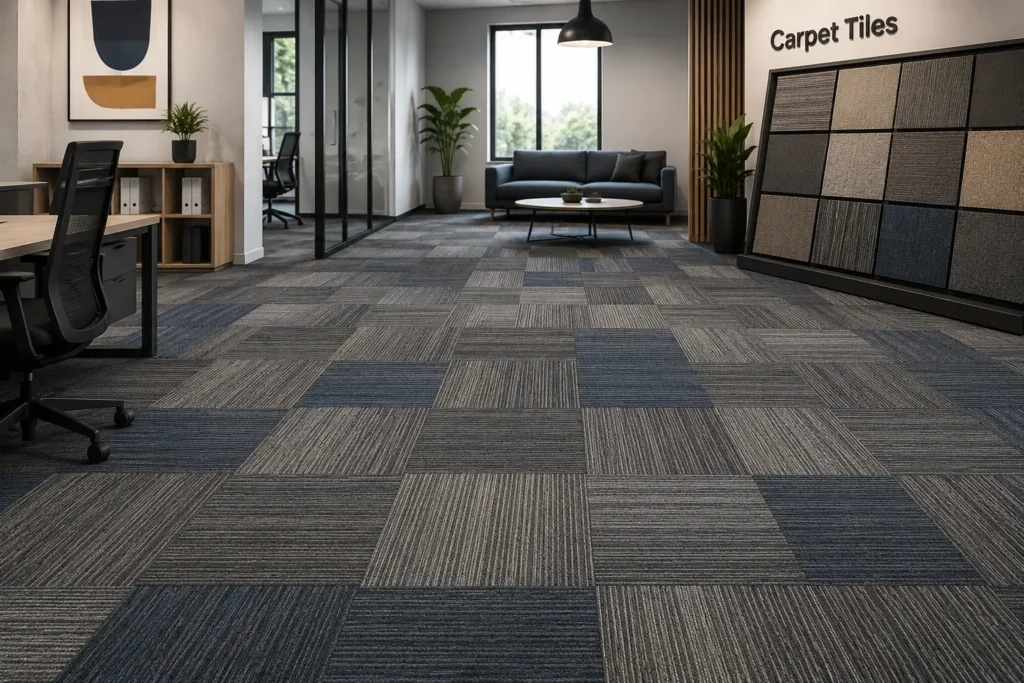
Carpet tiles are particularly practical for modern offices. They are installed in individual sections, which makes them easier to manage when part of the floor becomes damaged or heavily worn.
For example, if a tile near a coffee station gets stained, you may only need to replace that section rather than disturb the entire floor.
They also give designers more flexibility. You can combine colours, textures or directions to define different zones within an open-plan office.
Explore our range of office carpet tiles if flexibility and easier future maintenance are priorities.
Wall-to-Wall Carpet
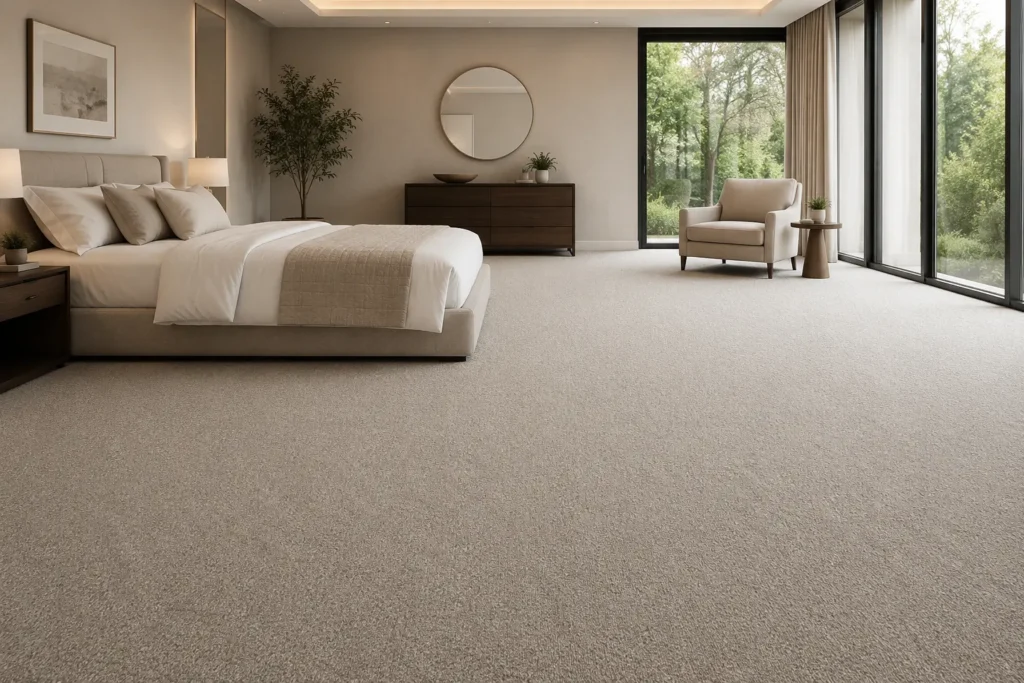
Wall-to-wall carpeting creates a continuous, finished appearance across the room. It can work especially well in boardrooms, executive offices, reception areas and workplaces where you want a more uniform visual effect.
It can also make a large room feel warmer and more cohesive because there are fewer visible breaks across the floor.
The choice ultimately depends on your office layout, maintenance expectations, budget and design goals. Neither option is automatically better for every workplace.
Choose the Right Carpet Fibre
The material matters just as much as the colour.
Common fibres used in commercial carpeting include nylon, polypropylene and wool, although their performance and suitability can differ depending on the specific carpet construction
Nylon
Nylon is widely used for commercial applications because it can offer good durability and resilience when properly specified. It is worth considering for areas where the carpet will face regular foot traffic and movement from office chairs.
Polypropylene
Polypropylene carpets can be an economical option and are available in a wide range of designs. Some products also offer useful stain and moisture resistance characteristics.
However, don’t judge a carpet solely by its fibre name. Construction, pile, backing and intended use all affect how a particular product performs.
Wool
Wool offers a naturally premium appearance and a comfortable feel underfoot. It can be an attractive choice for executive areas, boardrooms and spaces where aesthetics are especially important.
The downside is that premium natural-fibre carpets can require a larger investment, so they are not necessarily the most practical option for every busy office.
If you are comparing materials, ask the supplier what the specific product is designed for rather than assuming one fibre is universally superior.
Pay Attention to Traffic Levels
Think about your office in zones instead of treating the entire floor as one surface.
A reception entrance may experience constant movement from employees, visitors and delivery personnel. A private manager’s office might see much less traffic. A corridor connecting several departments can also experience significant wear.
A useful approach is to divide the office into:
Heavy-traffic areas: entrances, corridors, reception zones and busy workspaces.
Medium-traffic areas: general employee work areas and meeting rooms.
Low-traffic areas: private offices, small meeting spaces and less frequently used rooms.
Choose the carpet specification according to the hardest-working areas. Spending more on durability where it is needed can be more sensible than installing the same premium carpet everywhere.
Don’t Ignore the Carpet Pile and Construction
Carpet can look very different depending on its pile and construction.
Loop carpets, for example, can provide a structured commercial appearance and are commonly considered for busy office environments. Cut-pile carpets can offer a softer, more traditional appearance.
Texture also matters. A subtle textured carpet can be useful in offices because it can visually disguise minor marks and everyday variations better than an extremely plain surface.
That does not mean you should automatically choose a heavily patterned carpet. The design should still fit the office furniture, walls, lighting and overall brand identity.
Pick a Colour That Works With Your Office
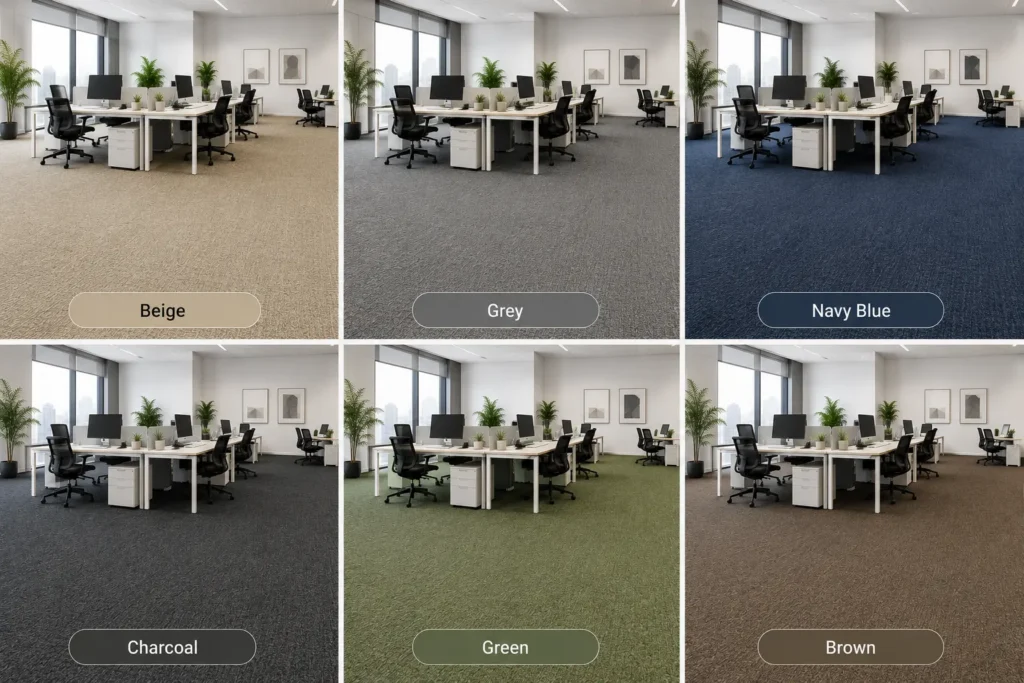
Colour is where many office buyers start, but it should come after the practical requirements have been considered.
Neutral shades such as charcoal, grey, beige and muted blue are popular because they can work with a wide range of office interiors.
Darker colours can give a sophisticated appearance, but very dark, solid surfaces may make dust and light debris more noticeable. Very pale carpets can make a room feel bright and spacious, but they may require more careful maintenance in high-traffic areas.
Patterned or subtly textured carpets can offer a useful middle ground.
For a corporate office, you might also use colour strategically. For example, a neutral base can be combined with a stronger accent colour around collaborative areas or circulation zones.
The carpet doesn’t need to carry your entire branding strategy. A few carefully selected colours can often look more professional than a floor covered in competing patterns.
Consider Office Acoustics
An office can become surprisingly noisy.
Footsteps, conversations, chair movement and general activity can all contribute to background noise, particularly in open-plan workplaces. Carpet can help soften some of these sounds compared with hard flooring surfaces.
If noise control is important, consider the complete flooring system rather than the carpet alone. The carpet construction, backing and underlay can all influence the final result.
A suitable carpet underlay can also contribute to comfort and sound insulation, depending on the product and installation conditions.
For open-plan offices, carpet is therefore not purely a visual decision. It can form part of a broader approach to creating a more comfortable working environment.
Check How Easy It Is to Maintain
Every office carpet needs maintenance. The question is how practical that maintenance will be.
Before buying, ask:
- How should the carpet be vacuumed?
- Is professional cleaning recommended?
- How does the material respond to common office spills?
- Can damaged sections be replaced?
- Are spare tiles or matching material available?
- Will heavy furniture leave permanent impressions?
- What cleaning products are suitable?
For businesses that expect years of use, maintenance should be considered during the purchasing decision, not after installation.
Carpet tiles can have a particular advantage here because individual damaged areas can potentially be replaced without removing the entire installation.
Think About Dubai’s Climate and Office Conditions
Dubai’s climate creates some practical considerations for flooring.
Dust and sand can be carried indoors through entrances and high-traffic areas. Air conditioning is also a major part of everyday office life, while humidity and moisture conditions can vary depending on the building and location.
This is another reason to think carefully about entrances, cleaning routines and carpet construction.
A practical office carpet should not only look good on installation day. It should continue to look appropriate after months of everyday use.
For entrances and corridors, consider darker or textured designs that are less visually sensitive to everyday dirt. Establishing a regular vacuuming and professional cleaning schedule is equally
Consider the Office Layout Before Ordering
Never estimate the required carpet quantity purely from a quick measurement of the room.
Office spaces often contain:
- Columns
- Doorways
- Built-in furniture
- Irregular corners
- Floor boxes
- Partitions
- Reception counters
- Changes between rooms
A professional measurement can account for these details and help reduce unnecessary waste.
It is also worth considering where carpet joins will fall. In a well-planned installation, seams and tile layouts should work with the room rather than becoming distracting visual lines.
If you’re unsure about measurements, take advantage of professional office carpet installation in Dubai rather than relying entirely on guesswork.
Match the Carpet to Different Office Areas
You don’t necessarily need one carpet throughout the entire workplace.
Reception
The reception area creates the first impression for visitors. A refined, durable carpet with a subtle pattern or brand-related colour can work well here.
Open-Plan Workspace
Prioritise durability, chair movement, comfort and maintenance. Carpet tiles are often worth considering because individual sections can be replaced more easily.
Meeting and Conference Rooms
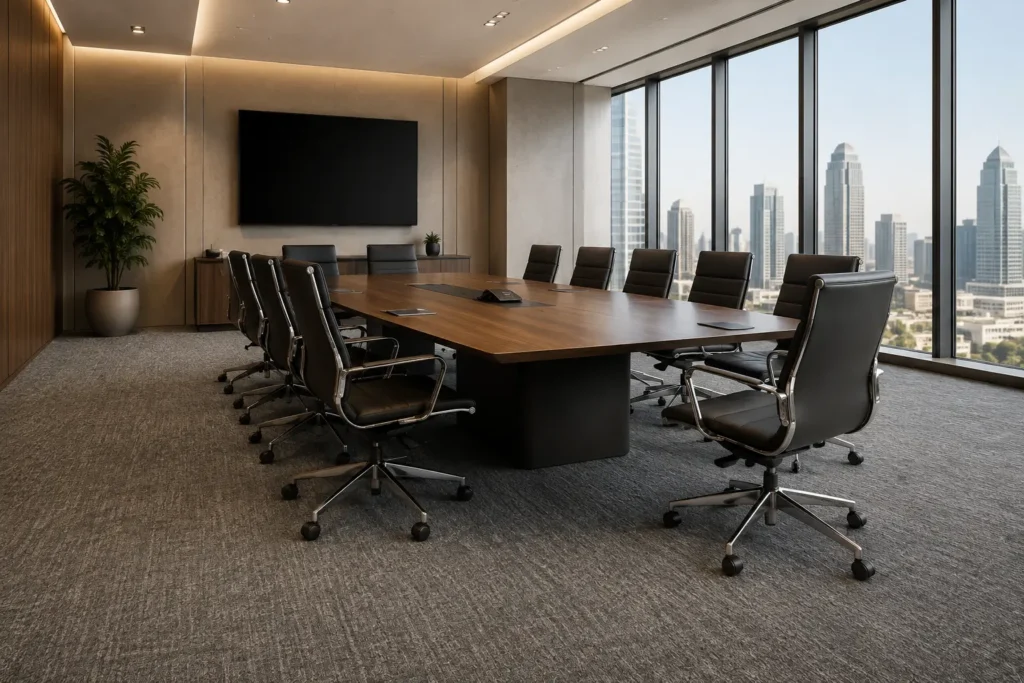
These areas allow you to place greater emphasis on appearance and acoustic comfort. Meeting and Conference Rooms can benefit from a more sophisticated colour or texture, which can work particularly well.
Executive Offices
Private offices provide more flexibility. Depending on the interior, you can consider premium textures, richer colours or higher-end carpet designs for executive offices.
Corridors
Durability should be the priority. Corridors experience repeated movement throughout the day, so choose a carpet designed for the level of traffic rather than selecting solely on appearance.
Don’t Choose From a Screen Alone
A carpet that looks perfect online can look completely different under your office lighting.
Screen settings, photography and surrounding colours can all change how a carpet appears. Always request a physical sample when possible.
Place the sample in the actual office and check it at different times of the day. Look at it beside your desks, walls and furniture rather than evaluating it in isolation.
This simple step can prevent an expensive mistake.
Compare the Total Cost, Not Just the Carpet Price
The cheapest carpet is not necessarily the most economical option.
When comparing quotations, consider:
- Carpet material and construction
- Carpet quantity
- Underlay or backing requirements
- Installation
- Floor preparation
- Removal of existing flooring
- Delivery
- Future maintenance
- Potential replacement costs
A carpet with a higher initial price may make more sense if it performs better under your office’s conditions and lasts longer.
Ask suppliers for a clear quotation so you can compare like-for-like specifications.
A Simple Way to Choose the Right Office Carpet
If you are overwhelmed by hundreds of samples, narrow the decision down in this order:
Step 1: Identify traffic levels.
Determine which parts of the office work hardest.
Step 2: Select the carpet format.
Decide whether carpet tiles, wall-to-wall carpet or a combination makes more sense.
Step 3: Choose suitable materials.
Compare fibres and constructions according to actual workplace requirements.
Step 4: Shortlist colours and textures.
Keep your office furniture, walls, lighting and brand identity in mind.
Step 5: Test physical samples.
View samples inside the actual space.
Step 6: Compare complete quotations.
Look beyond the price per square metre.
Step 7: Plan installation.
Make sure measurements, floor preparation and installation details are properly addressed.
This approach makes the process much easier because you are eliminating unsuitable options before getting caught up in design choices.
Final Thoughts
Choosing an office carpet is easier when you stop treating it as a purely decorative purchase.
Start with traffic. Consider the carpet format, material, maintenance and acoustics. Then look at colour, texture and design. Finally, compare complete installation costs and test physical samples in your actual office.
A good office carpet should look right on the day it is installed, but more importantly, it should continue to make sense after months of employees walking, working and moving around on it.
That is the standard worth using when choosing office flooring in Dubai.