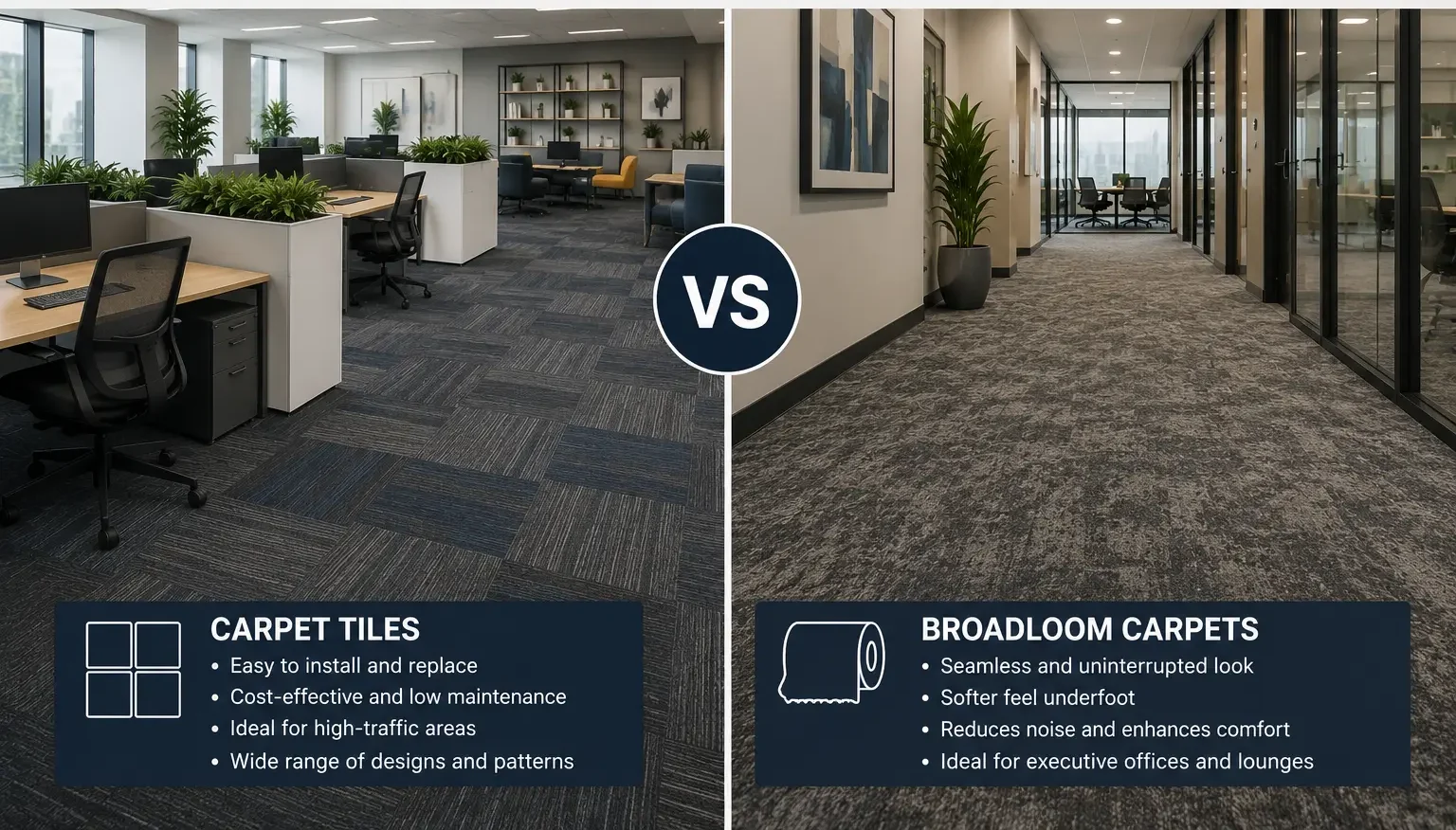
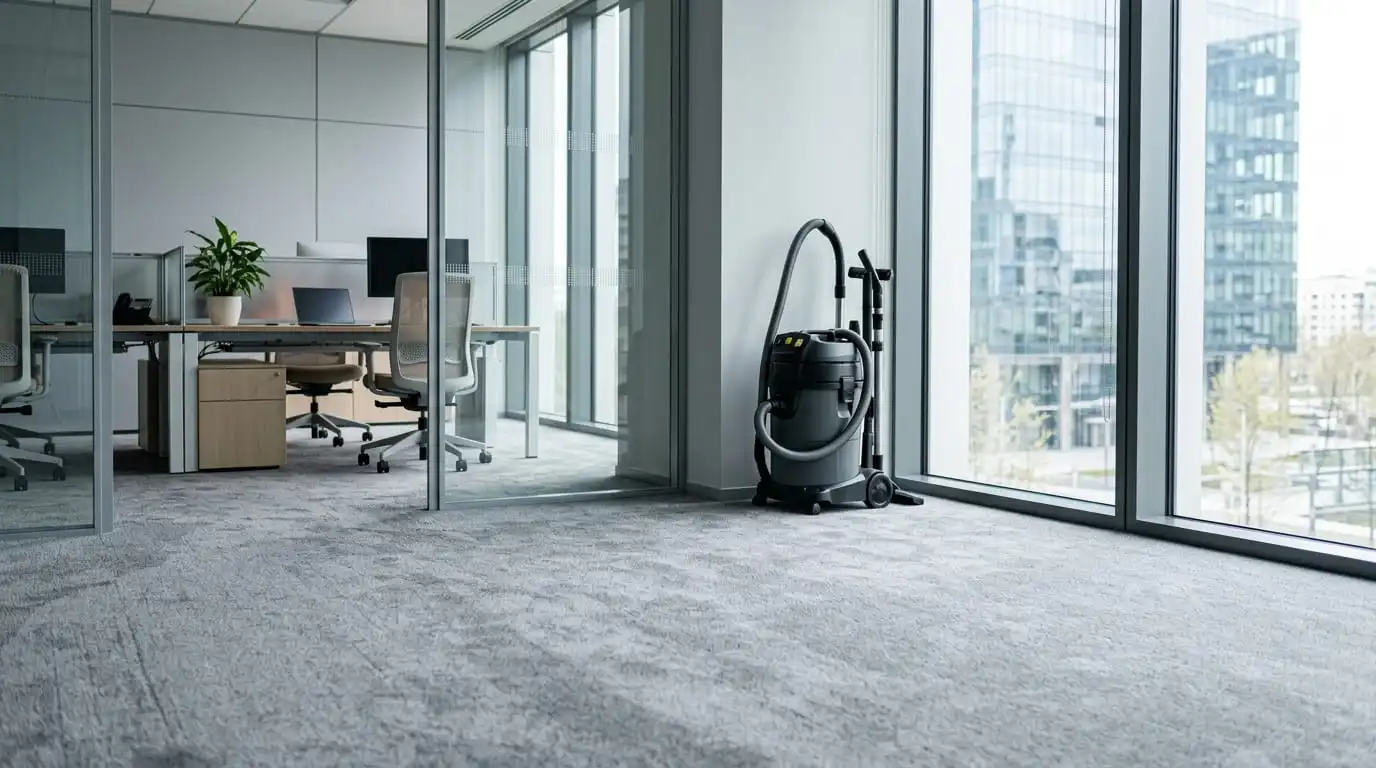
A carpet in the office endures a great deal on a daily basis. They are walked over for hours by employees, the office chairs roll back and forth, visitors bring dust inside with them and coffee or food spills are almost inevitable. Even a well-made commercial carpet can begin to take its toll before its time, if it’s not maintained properly.
Fortunately, office carpet maintenance doesn’t need to be difficult. Some simple changes in the areas of high traffic and a regular cleaning schedule can make a difference.
Whether you are using carpet tiles, wall-to-wall carpet or hallway carpet, these are some ways to help keep the floor looking and feeling clean, comfortable and presentable longer.
The importance of regular office carpet maintenance.
The carpet in the office is more than just a floor covering. They help to make the workplace look good, minimise footstep noise and create a pleasant surface to walk on.
But commercial carpets are exposed to more traffic than most residential carpets. Dust and grit may slip between the fibres of the carpet; repeated use of office chairs can over time compact some parts of the carpet. Liquids can also stain or have an unpleasant smell if left clean up.
It also makes good economic sense. It is quite different to tear up an entire office carpet because a particular section was not home to a large task force of visiting students, and replace it with a new carpet, than it is to maintain the existing carpet and repair damaged areas when needed.
1. Vacuum Office Carpets Regularly
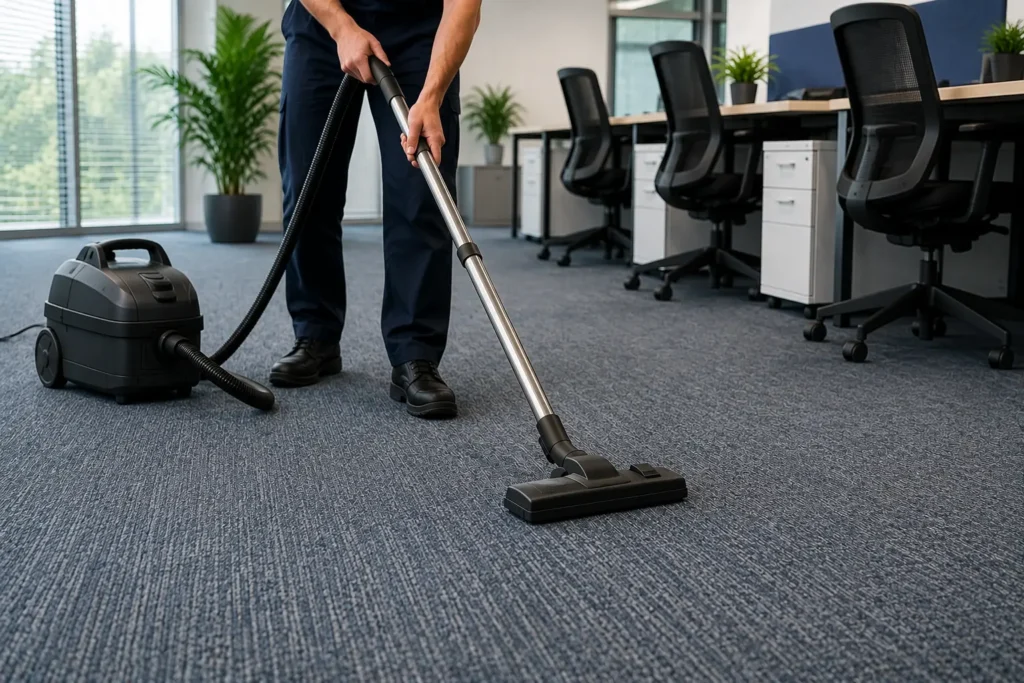
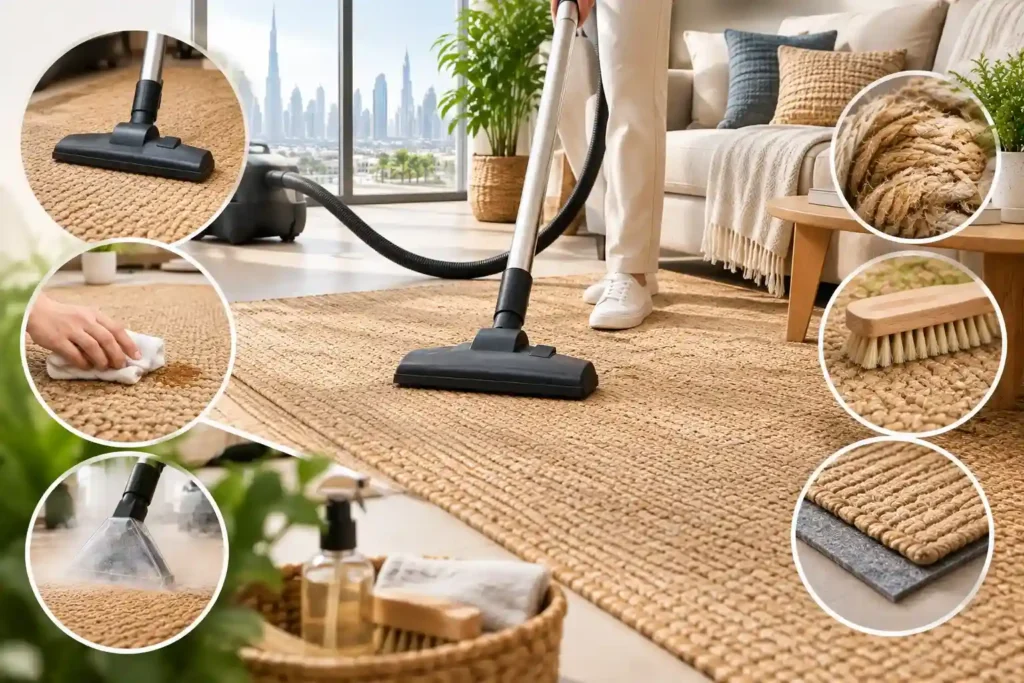
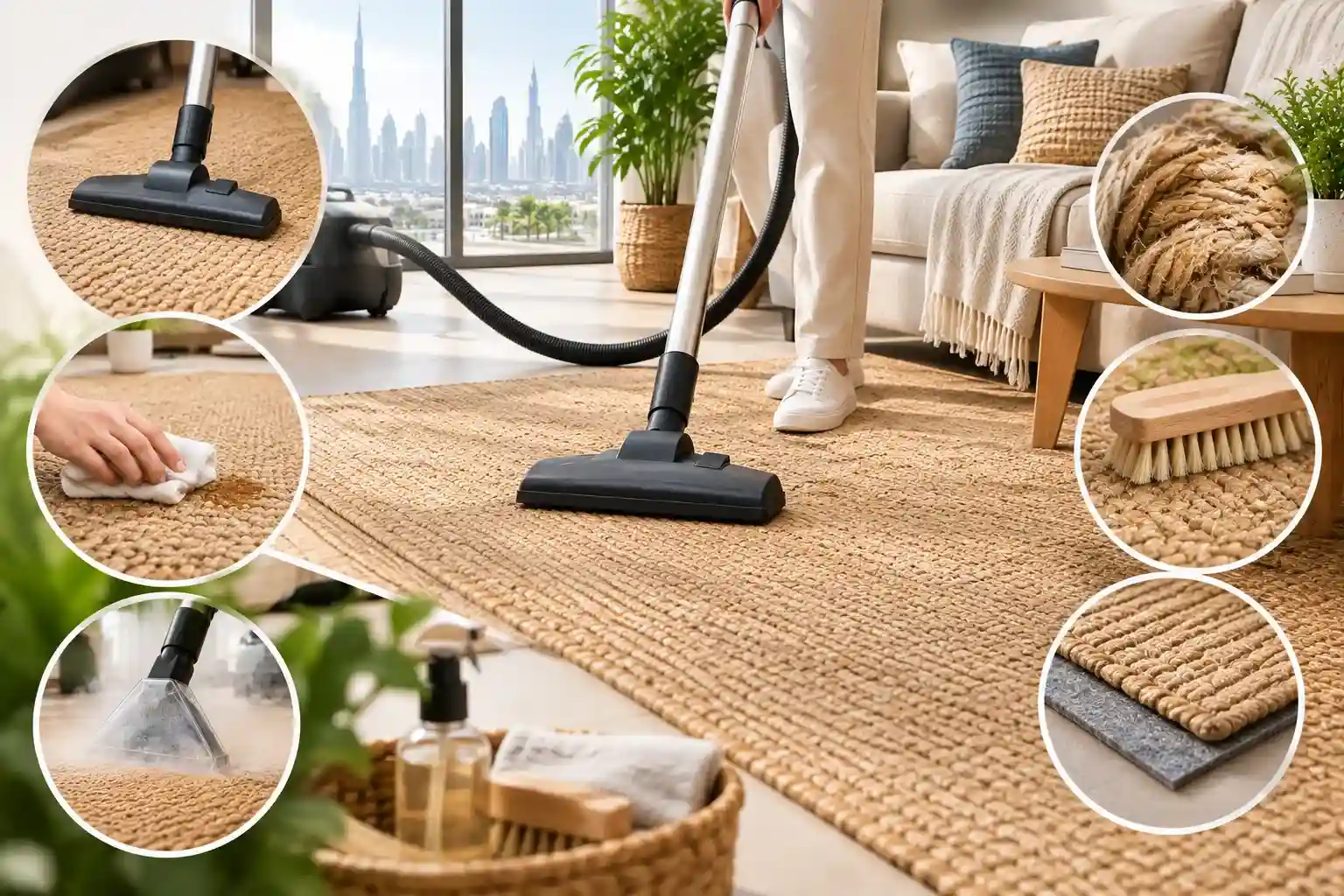
Vacuuming is the simplest and most important part of office carpet care.
Dust, sand, dirt, and small particles are brought into offices every day. In Dubai, this can be particularly noticeable because outdoor dust can easily enter through entrances and busy access points.
A good routine should focus on traffic levels rather than following one fixed schedule.
- Busy entrances and corridors: Vacuum daily or very frequently.
- Open-plan workspaces: Vacuum several times a week.
- Private offices and meeting rooms: Vacuum regularly based on use.
- Less-used areas: A less frequent schedule may be sufficient.
Pay extra attention to entrances, reception areas, corridors, pantry spaces, and areas around desks.
Do not rush the process either. Moving the vacuum too quickly may leave dirt behind. Slow, overlapping passes generally give better results.
2. Deal With Spills Immediately
A small coffee spill can become a stubborn stain if it sits on the carpet for hours.
The first step is to act quickly. Blot the liquid with a clean, absorbent cloth or paper towel rather than rubbing it aggressively. Rubbing can push the liquid deeper into the fibres and spread the affected area.
For most everyday spills:
- Remove excess liquid by blotting.
- Work from the outside of the spill toward the centre.
- Use a carpet-safe cleaning solution suitable for the carpet fibre.
- Avoid soaking the carpet.
- Blot again and allow the area to dry properly.
Always check the carpet manufacturer’s cleaning instructions before using a chemical product. Different fibres, dyes, backings, and finishes can react differently to cleaning agents.
For unknown stains or larger spills, professional cleaning is usually safer than experimenting with several household products.
3. Use Entrance Mats to Reduce Dirt
One of the easiest ways to protect office carpeting is to stop as much dirt as possible from reaching it.
Place suitable entrance mats at the main doors and other points where people enter the office. These mats can catch a significant amount of loose dirt and moisture before it reaches the carpet.
However, mats also need maintenance. A dirty entrance mat eventually becomes less effective and can transfer dirt back onto the carpet.
Clean and replace mats when necessary, and make sure they remain flat and secure so they do not become a trip hazard.
4. Pay Extra Attention to High-Traffic Areas
Not every part of an office carpet experiences the same amount of wear.
Reception areas, corridors, lift entrances, break rooms, and paths between workstations usually receive much more traffic than private rooms.
Instead of treating the entire floor exactly the same, create a maintenance plan based on usage.
For example, a reception area may need frequent vacuuming and periodic deep cleaning, while a small meeting room used twice a week may need much less attention.
This approach saves time while keeping the areas people notice most looking clean.
5. Move Office Furniture Carefully
Office chairs and heavy furniture can gradually affect carpet fibres and backing.
Rolling chairs are especially important because employees may move them over the same small area thousands of times. Dirt trapped beneath the wheels can also act like an abrasive material against the carpet.
Keep chair wheels clean and avoid dragging desks, cabinets, or other heavy furniture across the carpet. When furniture needs to be moved, lift it where practical or use appropriate moving equipment.
For heavily used workstations, choosing a carpet designed for commercial traffic can also make a difference from the beginning.
6. Rotate or Replace Damaged Carpet Tiles
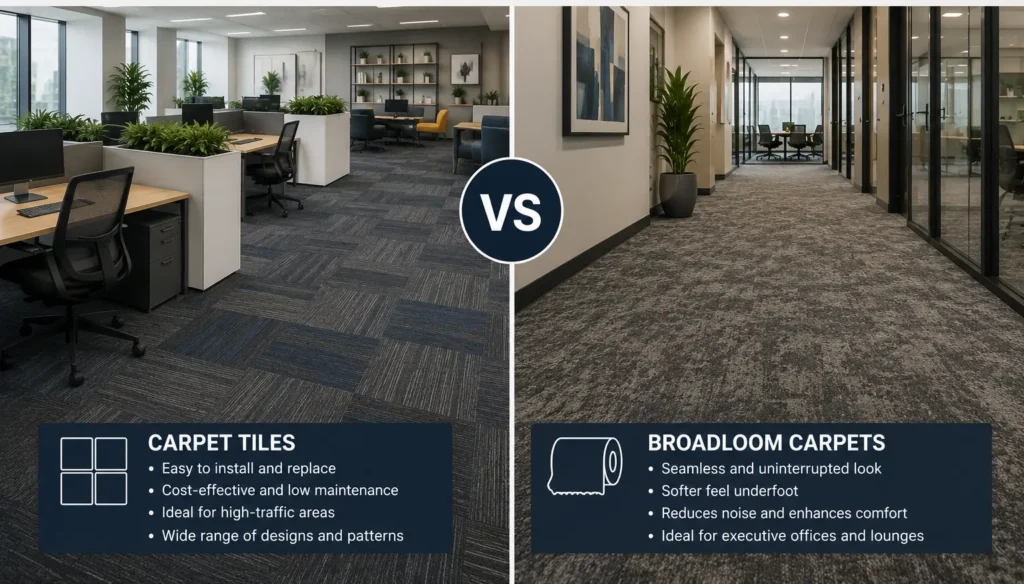
Carpet tiles have one major maintenance advantage: a damaged section does not necessarily mean the whole floor has to be replaced.
If your office uses modular carpet tiles, individual worn or stained tiles can often be removed and replaced. This is particularly useful in areas where damage is concentrated around a workstation, entrance, or corridor.
The key is to keep spare tiles from the original installation when possible. Over time, exact colour and pattern matching can become more difficult.
If a section is damaged, consider carpet tile replacement before the problem spreads or becomes more noticeable.
7. Schedule Professional Deep Cleaning
Regular vacuuming handles loose dirt, but it does not replace periodic deep cleaning.
Over time, dust, oils, fine particles, and other contaminants can become embedded deeper into carpet fibres. Professional cleaning can help remove this built-up soil and refresh areas that normal vacuuming cannot fully clean.
The right cleaning frequency depends on:
- Amount of daily foot traffic
- Carpet material and construction
- Office size
- Number of entrances
- Presence of food and drinks
- Indoor environmental conditions
- Manufacturer’s maintenance recommendations
A busy office may need professional cleaning more frequently than a small workplace with limited foot traffic.
Avoid choosing a cleaning method simply because it is popular. The cleaning process should be suitable for the specific carpet and its backing.
8. Keep Moisture Under Control
Moisture is another issue that should not be ignored.
Excess water can affect carpet backing, create unpleasant odours, and contribute to problems underneath the carpet if the area is not dried properly.
After cleaning or a significant spill, make sure the carpet dries thoroughly. Good ventilation can help, but avoid putting heavy furniture back onto a damp carpet.
In Dubai offices, air-conditioning can help with indoor comfort, but it does not mean a wet carpet will automatically dry safely. Give the carpet enough time to dry according to the cleaning method and environmental conditions.
9. Use the Right Cleaning Products
More cleaning product does not mean a cleaner carpet.
Using too much detergent can leave residue behind. That residue may attract more dirt and make the carpet look dirty again sooner.
Before using any stain remover or carpet detergent, check:
- Whether it is suitable for your carpet fibre
- Whether it is safe for the carpet’s colour
- Whether it is compatible with the backing
- Whether the manufacturer recommends it
- Whether it needs to be diluted
It is also sensible to test a cleaning product on a small, less visible area first.
Avoid bleach and harsh household chemicals unless the carpet manufacturer specifically approves them.
10. Inspect the Carpet for Small Problems
A quick visual inspection can prevent minor issues from becoming major repairs.
Look for:
- Loose or lifting edges
- Separated seams
- Flattened sections
- Permanent stains
- Burn marks
- Damaged carpet tiles
- Wrinkles or movement
- Loose transition areas
If you notice a problem, deal with it early.
For example, a loose edge may become worse when people repeatedly walk over it. A damaged carpet tile may be easier to replace before surrounding tiles also become worn.
Professional office carpet repair can sometimes restore a damaged section without replacing the entire floor, depending on the type and extent of the damage.
A Simple Office Carpet Maintenance Schedule
A practical schedule makes carpet care easier for office managers and cleaning teams.
Daily
- Vacuum busy entrances and main walkways.
- Remove visible dirt and debris.
- Deal with spills as soon as they happen.
- Check entrance mats.
Weekly
- Vacuum less-used areas thoroughly.
- Inspect high-traffic sections.
- Check for stains, loose edges, and damaged tiles.
- Clean around furniture and workstations where accessible.
Monthly or Periodically
- Review the condition of the entire carpet.
- Give extra attention to reception and corridor areas.
- Check whether professional spot treatment or deeper cleaning is required.
- Inspect carpet tiles for localised wear.
As Needed
- Arrange professional deep cleaning.
- Replace damaged carpet tiles.
- Repair loose or damaged sections.
- Review whether the existing maintenance routine is suitable for current office traffic.
Common Office Carpet Maintenance Mistakes to Avoid
Some maintenance habits can do more harm than good.
Waiting too long to treat stains: The longer a spill remains, the harder it may be to remove.
Scrubbing aggressively: Hard rubbing can spread stains and damage carpet fibres.
Over-wetting the carpet: Excess moisture can create problems beneath the surface.
Using random cleaning chemicals: A product that works on one carpet may damage another.
Ignoring high-traffic zones: These areas often show wear first.
Dragging furniture: Heavy furniture can damage fibres, seams, or backing.
Skipping professional cleaning: Vacuuming alone may not remove deeply embedded soil.
Replacing the whole floor unnecessarily: Localised damage may be repairable or limited to a few carpet tiles.
When Should You Consider Replacing an Office Carpet?
Maintenance can extend the useful life of office carpeting, but it cannot prevent normal wear forever.
Replacement may make sense when the carpet has widespread damage, persistent odours, extensive flattening, repeated seam problems, or an appearance that cannot be restored through cleaning and repair.
If only a small section is damaged, replacement may not be necessary. This is where modular carpet tiles can be particularly practical because individual sections can often be changed without disturbing the entire floor.
If you are unsure, have the carpet assessed before committing to a full replacement.
Final Thoughts
Keeping an office carpet in good condition is mostly about consistency. Vacuum regularly, respond quickly to spills, protect entrances, monitor high-traffic areas, and arrange deeper cleaning when normal maintenance is no longer enough.
It is equally important to repair small problems before they turn into larger ones. A damaged carpet tile, loose edge, or stubborn stain is easier to address when caught early.
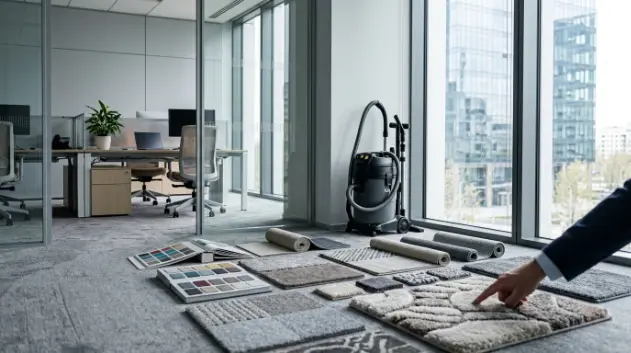
If you are planning a new workplace floor, choosing a suitable commercial carpet and installing it correctly from the start can make ongoing maintenance much easier. You can explore the available office carpet options and compare carpet tiles, wall-to-wall styles, runners, and other commercial flooring solutions based on your office requirements.
For offices in Dubai, professional advice can also help you select a carpet based on traffic, layout, material, and maintenance needs rather than appearance alone.