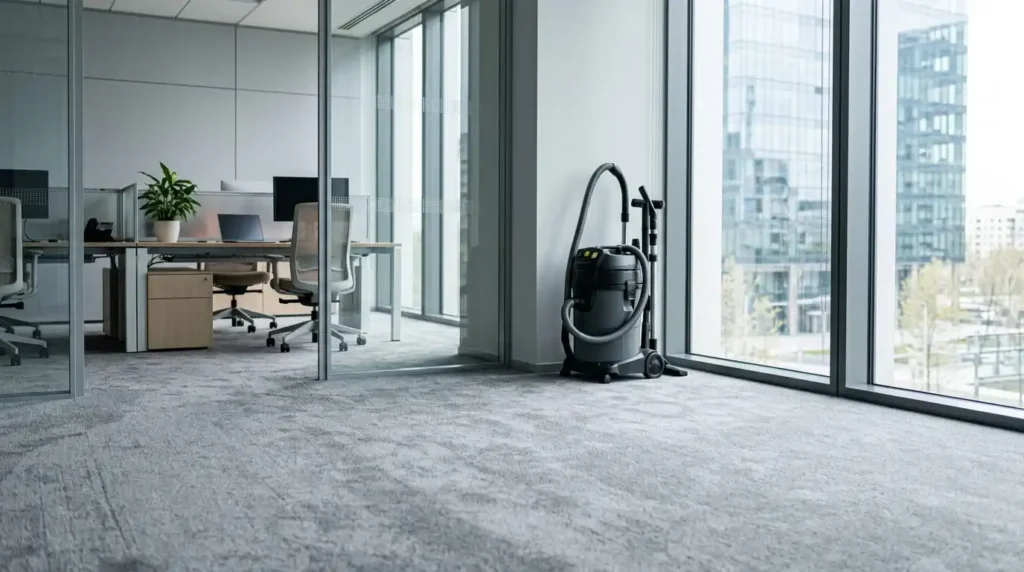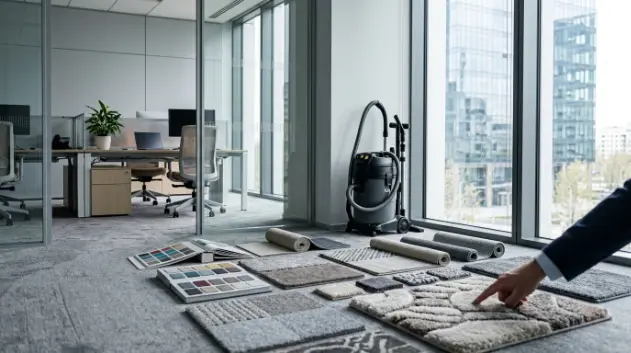
The natural texture and feel of Sisal is an excellent choice for offices, reception areas, corridors and any other place where you would like a more refined carpet as an alternative to standard synthetic flooring. However, the cleaning routine of the problem is the cleaning routine of the problem, but NOT the cleaning routine of sisal.
The most important rule is to avoid treating Dubai office carpets the way you would a washable carpet. Sisal is a natural plant fibre that can absorb moisture. Excessive water, harsh cleaning, or delaying stain treatment can cause the carpet to discolour, shrink, ripple, or otherwise change.
It’s even more important in Dubai where dust, sand, heavy foot traffic and air-conditioning are all a way of life.
A sisal carpet can be kept clean and well maintained for much longer by regular vacuuming, and prompt spill treatment and correct cleaning method.
Why Does Sisal Carpet Need Special Care?

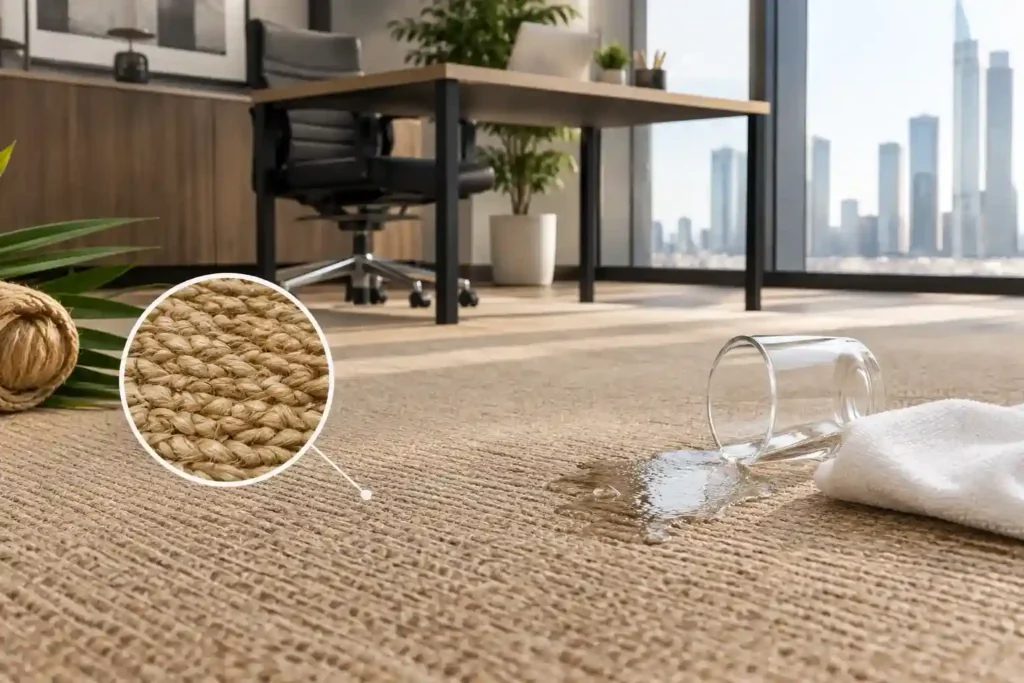
Sisal is made from natural plant fibres. Its textured surface can collect fine dust and grit between the fibres.
That dirt may not always be obvious. However, when it remains in sisal carpets, regular foot traffic can push it deeper into the weave and gradually contribute to fibre wear.
Moisture is another concern.
Unlike some synthetic carpets that can tolerate more water during cleaning, natural sisal is absorbent. Water can affect the fibres and may leave visible marks as the carpet dries.
For this reason, sisal maintenance is mainly about preventing dirt build-up and controlling moisture.
How Often Should You Vacuum a Sisal Carpet?
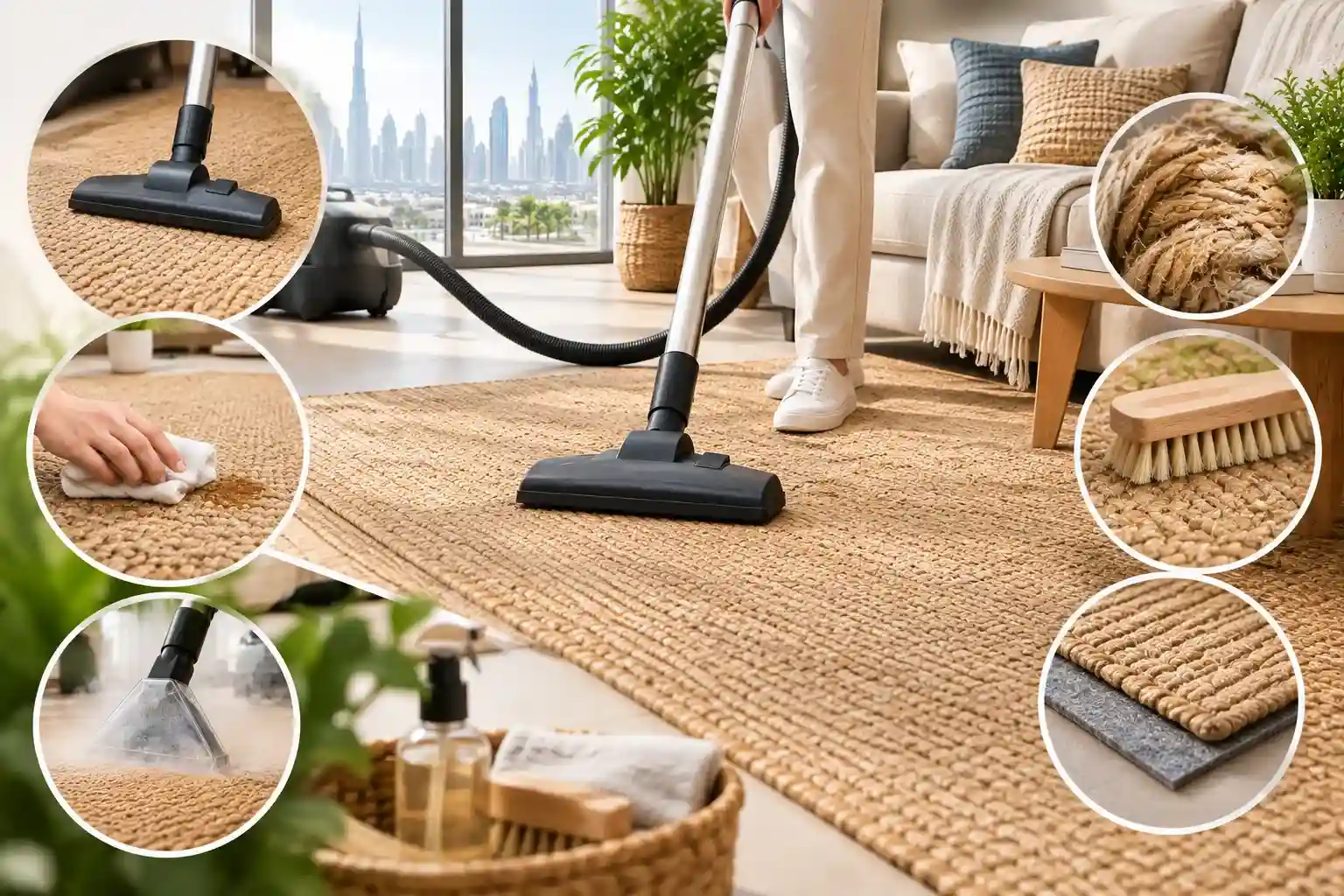
Regular vacuuming is one of the easiest and most effective ways to maintain sisal.
For a normal office or home, vacuuming around once or twice a week is a sensible starting point. High-traffic areas may need more frequent cleaning.
Pay particular attention to:
- Office entrances
- Reception areas
- Corridors
- Areas around desks
- Meeting rooms
- Spaces close to exterior doors
- Areas where sand and dust are commonly brought indoors
Use a vacuum with good suction and follow the care instructions supplied with your particular carpet.
For many natural-fibre carpets, a suction-focused setting is preferable to an aggressive rotating brush or beater bar. The correct vacuum setting can vary according to the carpet construction, so check the manufacturer’s instructions first.
Why Frequent Vacuuming Matters
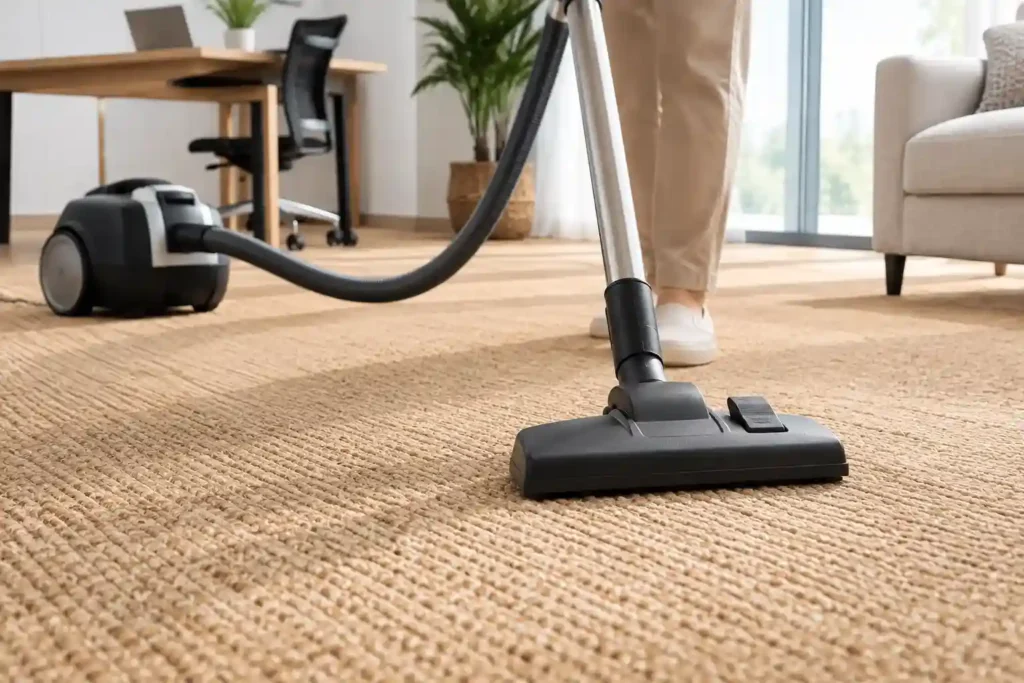
Think about the fine sand that can enter a Dubai office on shoes.
If it stays between the carpet fibres, every step can create a small amount of friction. Over time, that repeated movement can contribute to wear.
Regular vacuuming removes those particles before they become a bigger problem.
What Should You Do When Something Spills on Sisal?
Act quickly.
A small spill becomes much easier to manage when it is treated immediately. Waiting until the end of the working day gives the liquid more time to penetrate the fibres.
For liquid spills
- Take a clean, absorbent white cloth or paper towel.
- Gently blot the affected area.
- Work from the outside of the spill towards the centre.
- Keep using a clean section of the cloth as the liquid is absorbed.
- Allow the area to dry properly.
Do not rub the stain.
Rubbing can spread the liquid and push it further into the fibres. Several sisal-care guides specifically recommend blotting rather than rubbing.
Also, avoid pouring water directly onto the carpet to “wash out” the spill. With sisal, adding more water can create a bigger problem than the original spill.
For solid spills
If food or another solid substance falls onto the carpet, carefully lift it first.
Use a spoon or another blunt edge rather than scraping aggressively. Once the material has been removed, vacuum the remaining particles.
The aim is to remove the substance without pushing it deeper into the weave.
Can You Steam Clean Sisal Carpets?
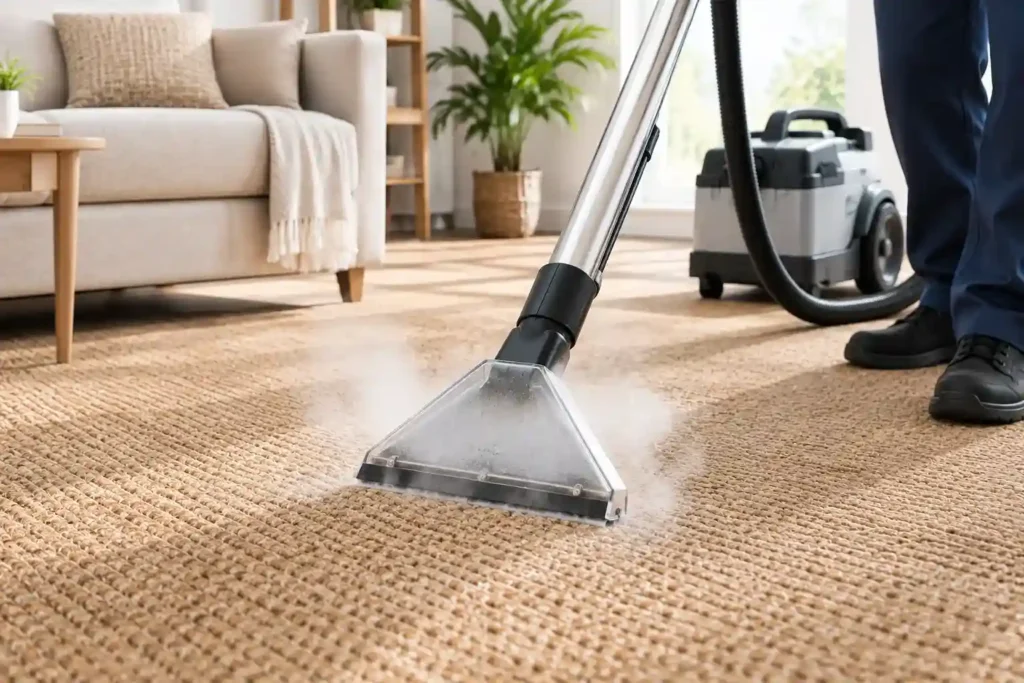
Generally, no.
Steam cleaning and wet shampooing introduce significant moisture into the carpet. Natural-fibre care guidance commonly advises against saturating sisal because excessive moisture can cause problems such as shrinkage, staining, discoloration or changes in shape.
This does not mean sisal can never receive professional cleaning.
It means the cleaning method needs to be appropriate for the particular sisal carpet.
For a larger cleaning job, speak to a professional cleaner experienced with natural-fibre carpets and ask which low-moisture or dry-cleaning method is suitable for your carpet.
Always check the manufacturer’s care instructions first.
What Cleaning Products Should You Use?
Be careful with household cleaning products.
A strong carpet cleaner that works perfectly well on synthetic flooring may not be appropriate for sisal. Bleach, aggressive chemicals, highly alkaline or acidic cleaners and excessive amounts of detergent can damage natural fibres or alter their appearance.
Before using any cleaning solution:
- Check the carpet manufacturer’s instructions.
- Read the product label carefully.
- Test it on a small, hidden area if the instructions permit.
- Never pour the product directly onto the carpet.
- Avoid using excessive moisture.
- Stop if the carpet changes colour or texture.
When in doubt, professional cleaning is safer than experimenting with a strong household chemical.
How to Deal With Common Sisal Carpet Problems
Different spills need different approaches, but the same principle applies: remove the material quickly and use as little moisture as possible.
Coffee and tea
Blot the spill immediately with a clean white absorbent cloth.
Do not scrub the area. Continue blotting until you have removed as much liquid as possible.
Because coffee and tea can leave visible marks, do not wait for the spill to dry before taking action.
Water
It may seem strange, but even plain water should be dealt with quickly.
Sisal absorbs moisture, and a wet patch can attract dirt from the surrounding fibres as it dries. Blot the area rather than wiping it around.
Food
Remove solid food carefully with a spoon or dull edge.
Avoid pushing the food into the carpet. Once the solid material is gone, vacuum any loose residue.
Mud
Let heavy mud dry rather than spreading it around while it is wet.
Once dry, gently loosen the material and vacuum it. If a mark remains, follow the carpet manufacturer’s stain-removal instructions or contact a professional cleaner.
Oil or greasy substances
Greasy stains can be more difficult because they may require a specific treatment.
Do not immediately reach for a strong solvent. Check the manufacturer’s stain-care instructions first, or ask a professional natural-fibre carpet cleaner for advice.
How Dubai’s Dust and Sand Affect Sisal Carpets
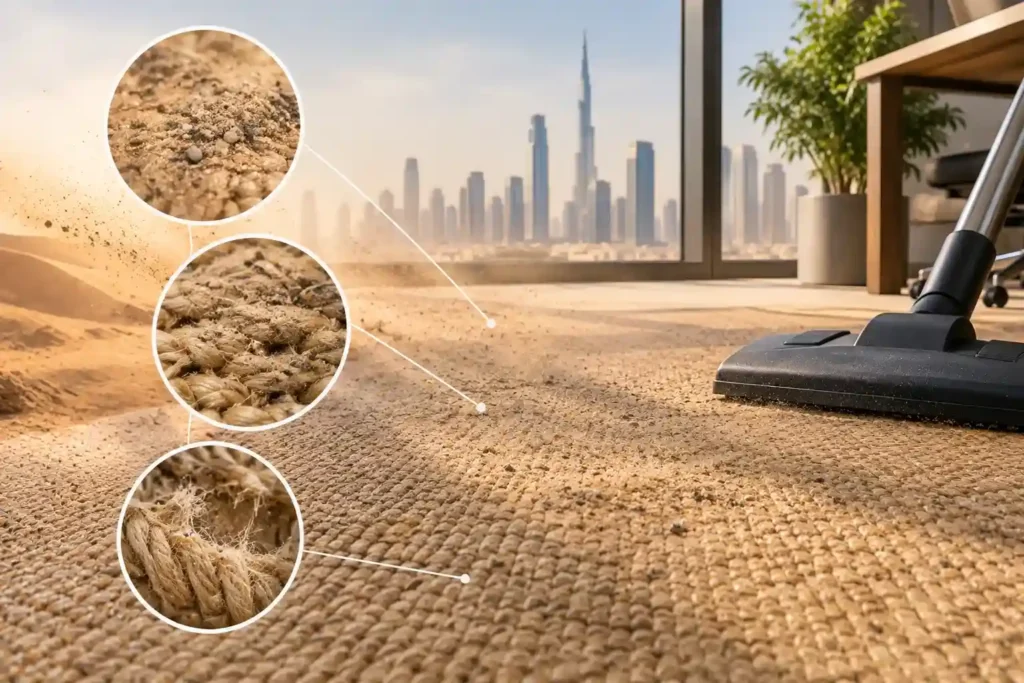
Dubai’s environment makes regular preventative maintenance particularly useful.
Fine dust and sand can enter offices through entrances, footwear and open areas. A carpet positioned near an entrance can therefore collect more abrasive particles than one in a quiet meeting room.
A simple maintenance routine can help:
- Keep entrance areas clean
Use suitable entrance mats to capture dirt before it reaches the sisal carpet.
- Vacuum high-traffic areas more often
Reception areas and corridors usually need more attention than low-use rooms.
- Keep mats clean
A dirty entrance mat eventually stops doing its job effectively.
- Deal with spills immediately
Do not leave stains until the next cleaning visit.
- Follow the carpet’s care instructions
Natural-fibre carpets can differ in construction, backing and finish, so one cleaning method should not automatically be used for every product.
Be Careful With Humidity and Moisture
Dubai’s climate is generally hot and dry for much of the year, but indoor environments can have different humidity levels depending on air-conditioning, ventilation and the building itself.
Sisal is sensitive to moisture and changes in humidity. Natural-fibre manufacturers therefore advise keeping sisal away from areas where it is regularly exposed to dampness or frequent spills.
For an office, this means sisal may be better suited to areas such as:
- Reception spaces
- Executive offices
- Meeting rooms
- Corridors
- General work areas
Extra care should be taken in locations where water is frequently present.
How to Prevent Early Wear on Sisal Carpets
Cleaning is only one part of carpet maintenance.
How the carpet is used also matters.
Use entrance mats
Place suitable mats at entrances to reduce the amount of dust and sand reaching the carpet.
Move furniture carefully
Dragging heavy desks, cabinets or chairs across the carpet can put unnecessary stress on the fibres.
Lift furniture when possible rather than dragging it.
Watch chair movement
Office chairs can create repeated wear in one small area. Depending on the carpet construction and manufacturer’s recommendations, a suitable protective mat may help in areas with rolling chairs.
Deal with loose fibres carefully
Natural sisal may occasionally have individual fibres or small strands that stand above the surface.
Do not pull them out.
If the manufacturer’s care instructions allow it, an isolated loose fibre can usually be carefully trimmed level with the surface using sharp scissors.
Should You Hire Professional Cleaners for Sisal Carpet?
For everyday maintenance, regular vacuuming and prompt spill treatment can go a long way.
Professional cleaning becomes more useful when:
- The carpet has widespread soiling.
- A stain has been left untreated.
- The carpet covers a large office area.
- You are unsure which cleaning method is safe.
- The carpet has developed an unusual smell or visible moisture damage.
- You need cleaning without saturating the natural fibres.
Tell the cleaning company that the carpet is sisal before they begin.
That small detail matters because the cleaning process suitable for synthetic office carpet may not be suitable for natural sisal.
If your office needs a new natural-fibre floor covering rather than cleaning an existing one, you can also explore the Sisal Carpets collection available from Dubai Office Carpets.
Sisal Carpet Maintenance: Quick Do’s and Don’ts
| Do | Don’t |
| Vacuum regularly | Don’t allow dirt to build up |
| Blot spills immediately | Don’t rub stains aggressively |
| Remove solid spills carefully | Don’t push food deeper into the weave |
| Use clean white cloths | Don’t use coloured cloths that may transfer dye |
| Follow manufacturer care instructions | Don’t assume every carpet cleaner is suitable |
| Use professional natural-fibre cleaning when needed | Don’t steam clean or wet-shampoo unless specifically approved |
| Keep entrance mats clean | Don’t allow excessive sand and dirt to reach the carpet |
| Dry any treated area promptly | Don’t leave the carpet unnecessarily damp |
How to Keep Sisal Carpets Looking Good for Longer
The best approach is not complicated.
You do not need to constantly deep-clean a sisal carpet. In fact, excessive cleaning can create its own problems if too much moisture is used.
Instead, focus on the basics:
Vacuum regularly.
Remove dust, sand and other fine particles before they work deeper into the fibres.
React quickly to spills.
The faster you absorb a spill, the less opportunity it has to penetrate the carpet.
Keep moisture under control.
Sisal is a natural fibre, so soaking it is not part of normal maintenance.
Protect busy areas.
Entrance mats and sensible furniture placement can reduce unnecessary wear.
Use the right professional cleaning method.
When the carpet needs more than routine maintenance, choose someone who understands natural-fibre flooring.
Final Thoughts
Sisal carpets can be a practical and attractive choice for offices and interiors where natural texture matters. Their maintenance is straightforward, but it requires a little more care than many synthetic carpets.
The main lesson is worth remembering: keep the carpet clean, deal with spills quickly and keep excessive moisture away from the fibres.
Regular vacuuming is your first line of defence. Entrance mats help control dust and sand. Prompt blotting can prevent a small spill from becoming a stubborn stain. And when deeper cleaning is required, use a method designed specifically for natural-fibre carpets.
If you are considering sisal flooring for an office, reception area or another commercial space in Dubai, choose the carpet according to the area’s traffic, exposure to spills and maintenance requirements rather than appearance alone.
Frequently Asked Questions
Can I wash a sisal carpet with water?
It is not recommended to soak or wash sisal with large amounts of water. Sisal is absorbent and excessive moisture can cause staining, shrinkage or other changes. Follow the manufacturer’s specific care instructions.
How often should I vacuum sisal carpet?
For many spaces, once or twice a week is a useful starting point. High-traffic areas may need more frequent vacuuming, especially where dust and sand are commonly brought indoors.
Can sisal carpets be steam cleaned?
Generally, steam cleaning and wet shampooing are not recommended for natural sisal because they can introduce too much moisture. A professional dry or low-moisture cleaning method may be more appropriate depending on the carpet manufacturer’s instructions.
What should I do if I spill coffee on sisal?
Blot it immediately with a clean, absorbent white cloth. Do not rub the area and do not pour water over it. If the stain remains, check the manufacturer’s stain-care instructions or contact a professional cleaner experienced with natural-fibre carpets.
Is sisal suitable for busy offices in Dubai?
It can be suitable for certain office areas, but the decision should consider foot traffic, spill exposure, maintenance expectations and the specific sisal construction. High-spill areas require more caution because natural sisal is moisture-sensitive.
How can I protect sisal carpet from Dubai dust?
Use clean entrance mats, maintain them regularly and vacuum the carpet consistently. Paying extra attention to entrances, corridors and other high-traffic areas can help prevent fine dust and sand from accumulating in the fibres.