The process of selecting the right carpet is not over and done with. The type of installation that this carpet goes through can make an equal difference to the office.
While a sample carpet presentation might look great, a carpet that is not properly fitted will show seams, loose edges, irregular sections, will wear out quickly and cause issues with office furniture. Any of these minor installation problems can become apparent in a hectic Dubai office where chairs are rolled around, meetings are held and the carpet is cleaned frequently.
Because, office carpet installation should be considered as the part of the flooring project and should not be made as the last option.
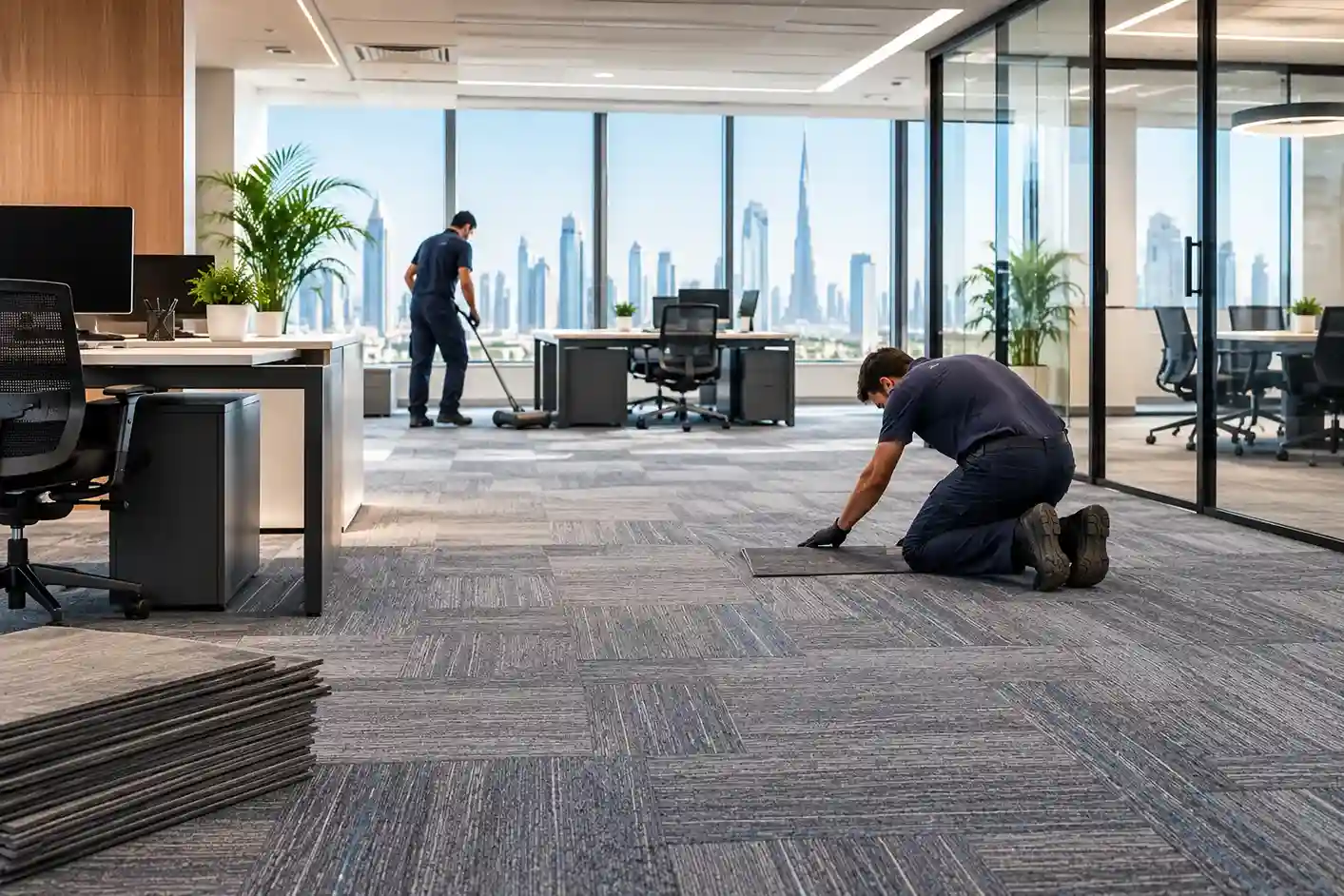
Professional installation begins with precise measurement and floor preparation and involves cutting, positioning, joining, securing and finishing. The simple objective is to ensure that the carpet is installed correctly, tidy and functioning as designed.
1. Accurate Measurement Reduces Costly Mistakes
Office floors are rarely as straightforward as they appear.
There may be columns, partitions, doorways, awkward corners, built-in furniture, raised flooring or different room shapes. Measuring only the overall length and width can result in incorrect material quantities or poorly planned cuts.
Professional installers assess the actual layout before installation. They can account for:
- Room dimensions
- Corners and recesses
- Door openings
- Columns and fixed furniture
- Walkways and high-traffic areas
- Carpet pattern direction
- Seams and joins
- Areas that may require different carpet sections
This matters particularly for larger offices. A small measurement error repeated across several rooms can mean wasted material, additional cutting and unnecessary project delays.
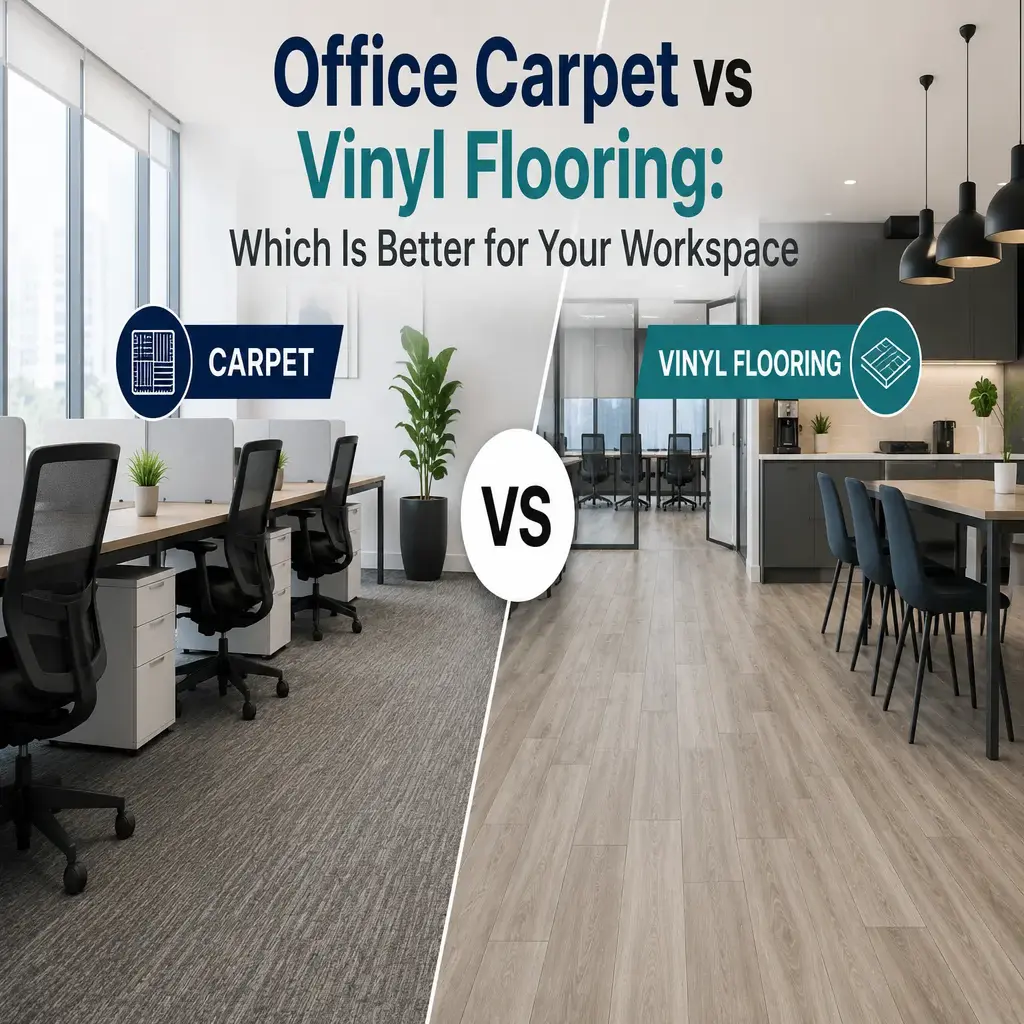
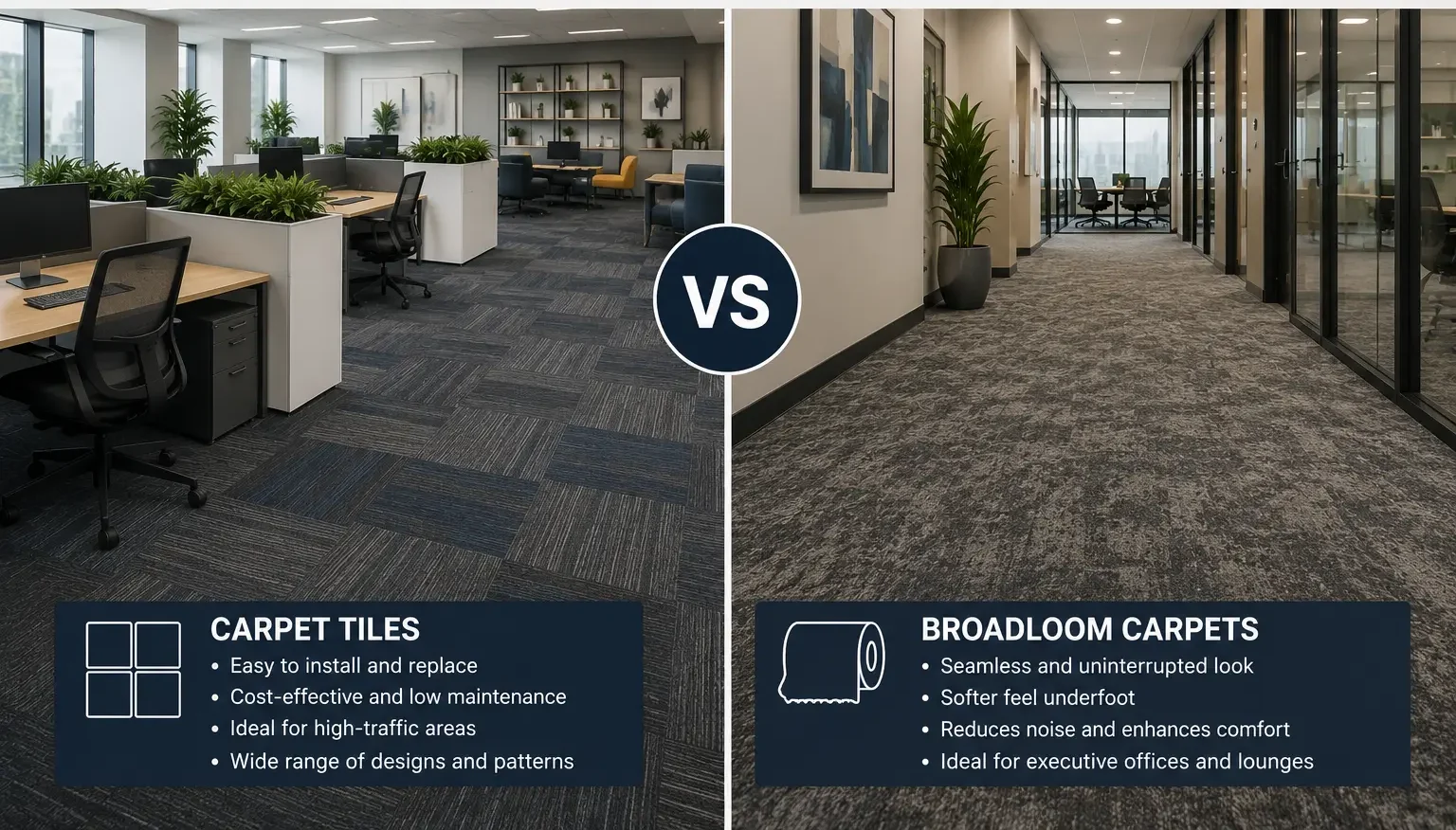
A proper site measurement also helps businesses decide whether wall-to-wall office carpeting or modular carpet tiles make more sense for their workspace.
2. Proper Installation Creates a Cleaner Finish

A commercial office should look organised from the moment someone walks through the door.
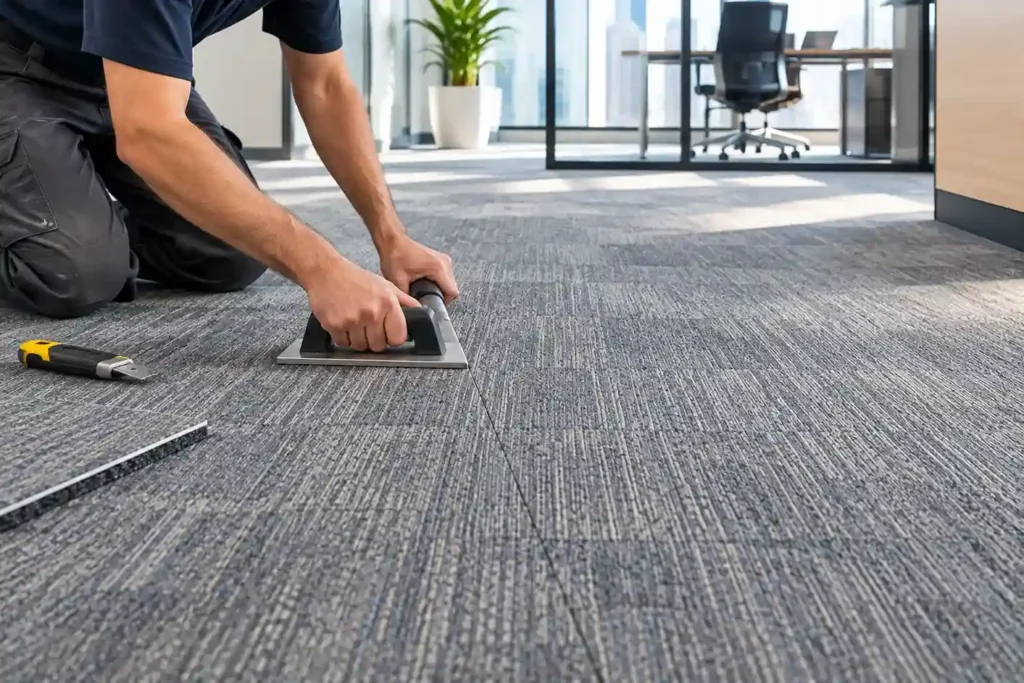
Loose edges, visible gaps and poorly aligned seams can make even a good-quality carpet look cheap. Professional installation focuses on the details that are easy to overlook when carpet is fitted without the right experience or equipment.
The installer needs to position the carpet correctly, make accurate cuts and ensure joins are as unobtrusive as possible.
This is particularly important when installing patterned or textured carpets. The direction and alignment of the pattern need to be considered across adjoining sections.
For carpet tiles, consistent positioning is equally important. Poor alignment can create visible lines across the floor and make the entire installation look uneven.
3. It Helps the Carpet Handle Daily Office Traffic
An office floor has a very different workload from a residential room.
Think about the areas around reception desks, corridors, meeting rooms, workstations, printers and pantry areas. Employees and visitors may walk across the same sections hundreds of times during a working day.
Office carpets are designed for commercial environments, but their performance still depends on correct fitting.
A properly installed carpet is less likely to shift, curl or develop obvious movement around busy areas. Furniture such as office chairs also needs to move across the surface without catching loose sections or damaged edges.
The right installation method will depend on the carpet type, backing, subfloor and intended use.
4. Professional Installation Protects the Office Floor
Carpet installation is not simply about placing material over an existing floor.
Before fitting begins, the condition of the subfloor should be considered. Dust, uneven areas, moisture or surface imperfections can affect the finished carpet.
If the underlying surface needs attention, installing carpet directly over the problem may only hide it temporarily.
In some projects, an appropriate carpet underlay can also improve comfort and acoustic performance while providing additional support beneath the carpet. The right underlay depends on the carpet, subfloor and requirements of the space. For example, underlay products available on the our website include options with different thicknesses, densities and sound-insulation specifications.
The important point is that the entire floor system should be considered rather than choosing the carpet alone.
5. It Can Improve Workplace Comfort

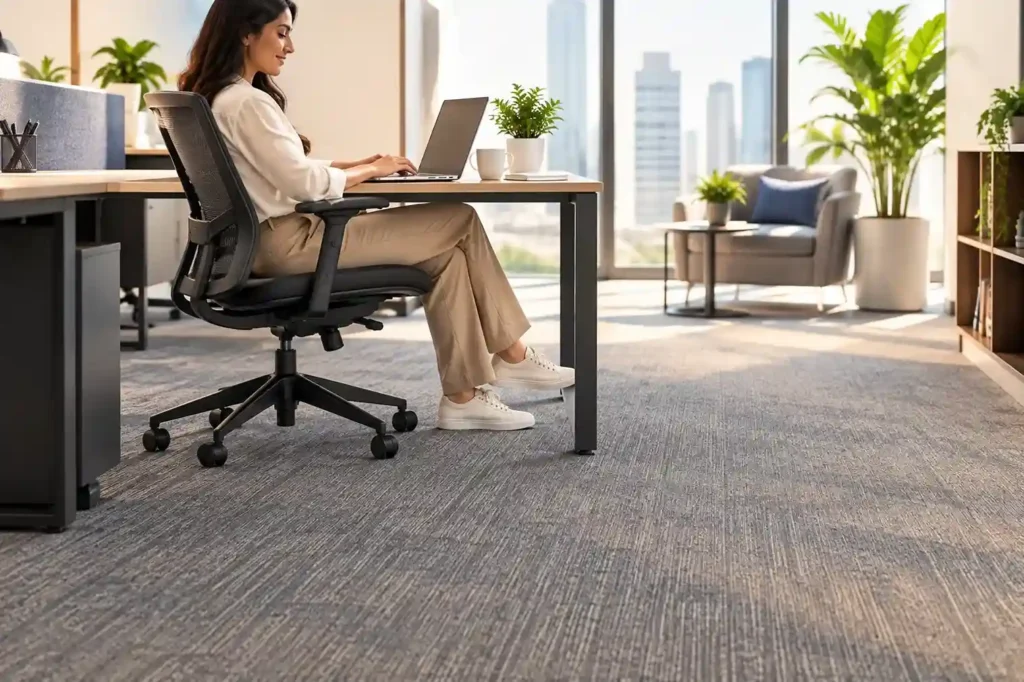
Office carpets are often selected because they provide a softer surface than hard flooring.
They can also help reduce the feeling of noise created by footsteps and general movement, which can be useful in open-plan workplaces.
But installation still matters.
Gaps, raised sections or poorly secured areas can create an uncomfortable walking surface. A well-fitted carpet provides a more consistent floor underfoot and creates a cleaner surface for everyday office movement.
For businesses with open workspaces, meeting areas or reception zones, carpet can also contribute to the overall feel of the room without making the flooring the centre of attention.
6. Carpet Tiles Need Particular Attention to Alignment
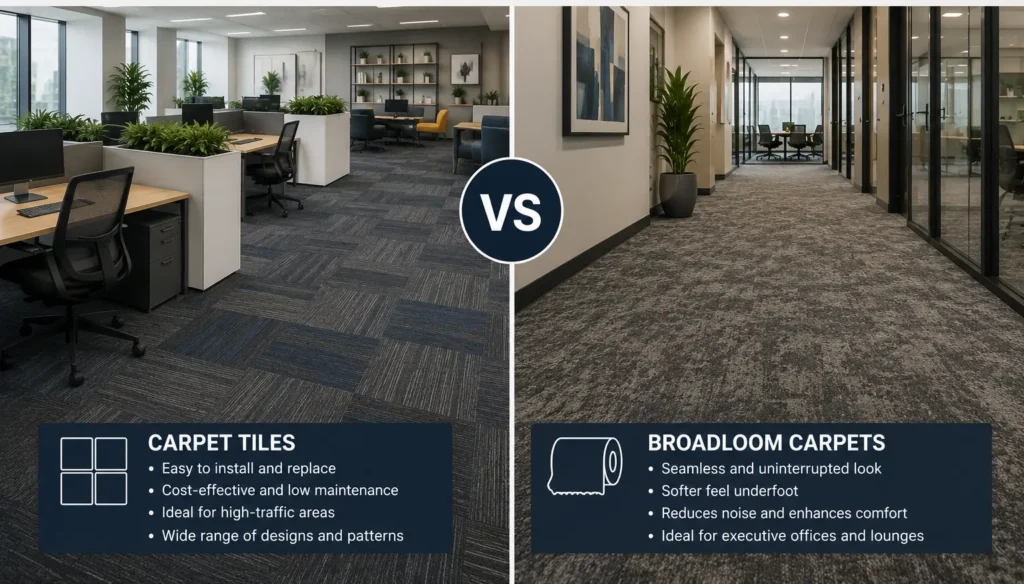
Carpet tiles are popular for offices because individual sections can be removed and replaced when necessary.
That is one of their practical advantages. If a small section becomes badly stained or damaged, replacing the affected tile may be more practical than replacing the entire floor.
However, the installation needs to be precise.
Tiles should be positioned consistently, with attention to the direction of the pattern, edges and transitions between areas. A poorly aligned tile layout can be obvious, particularly across large open office floors.
Professional fitting also makes it easier to plan the layout around high-traffic zones and areas where future replacement may be more likely.
For businesses considering this option, carpet tiles for commercial offices can be worth comparing with traditional broadloom carpet before making a final decision.
7. It Helps Businesses Avoid Disruptions Later
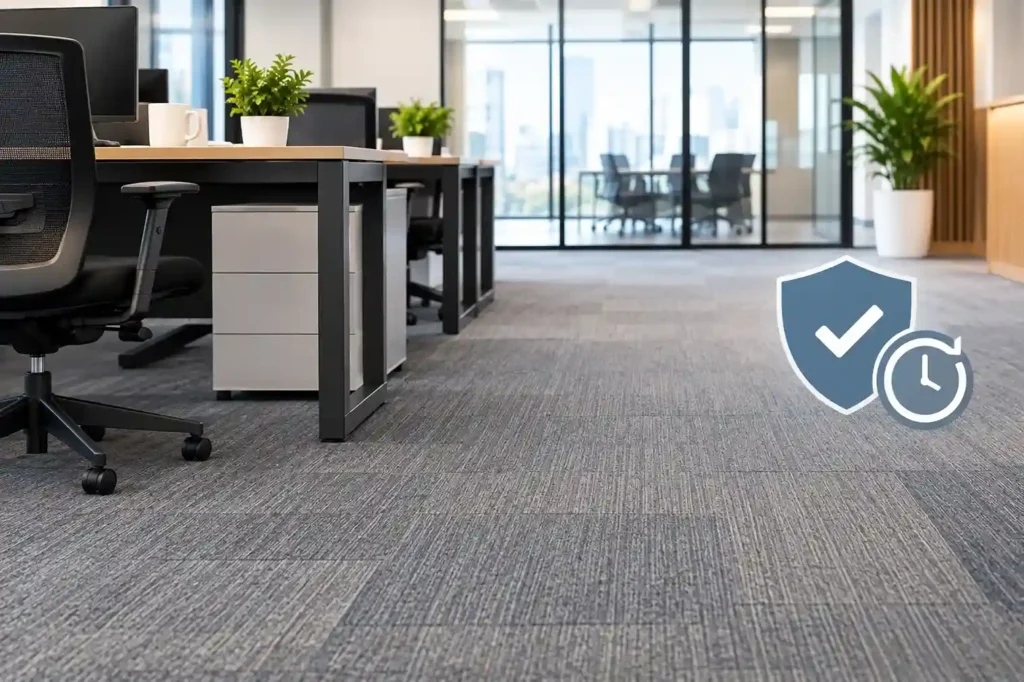
Replacing or repairing an office carpet after installation problems can be more disruptive than getting the original installation right.
Imagine opening a new office only to find that carpet edges are lifting or several sections need to be refitted. Employees may need to move furniture again, meeting rooms may become temporarily unavailable and the business may have to spend more on labour.
A professional installation plan considers the practical side of the project from the beginning.
This includes discussing:
- The office layout
- Carpet type and quantity
- Existing floor condition
- Installation method
- Furniture movement
- Access to the workspace
- Finishing requirements
- Expected traffic after installation
For businesses working to a tight schedule, planning these details early can make the process much easier.
8. Professional Fitting Makes More Sense for Custom Office Carpets
Some businesses want more than a standard carpet.
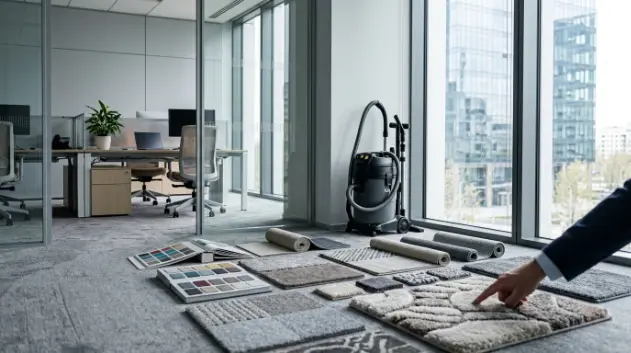
They may want specific colours, patterns, sizes or branded designs that fit their office identity. We offers custom office carpet options alongside standard commercial carpets.
With a custom design, installation becomes even more important.
The positioning of each section needs to work with the overall design. A small error in alignment can become very noticeable when a carpet includes a repeating pattern, logo or defined border.
This is one situation where professional measurement and fitting can protect the visual result of the entire flooring investment.
9. It Helps Create a More Professional First Impression
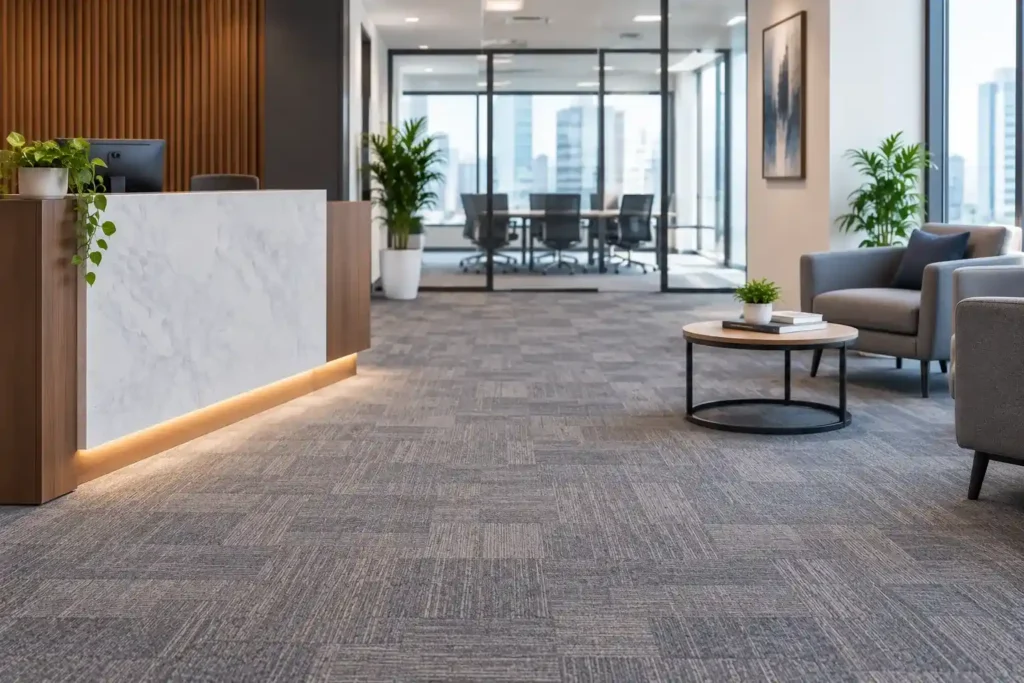
Reception areas, boardrooms and meeting rooms are often the first parts of an office visitors see.
Flooring is not usually something a visitor consciously analyses, but they notice when a space looks poorly maintained.
A well-fitted carpet with clean edges and consistent joins creates a more finished appearance. It works with the furniture, lighting and overall office design instead of distracting from them.
This is particularly relevant for businesses receiving clients, suppliers or partners regularly.
The carpet does not need to be expensive or overly decorative. Good measurement, suitable material selection and careful installation can make a standard commercial carpet look considerably better.
10. Professional Installation Makes Maintenance Easier
Office carpets need regular care regardless of who installs them.
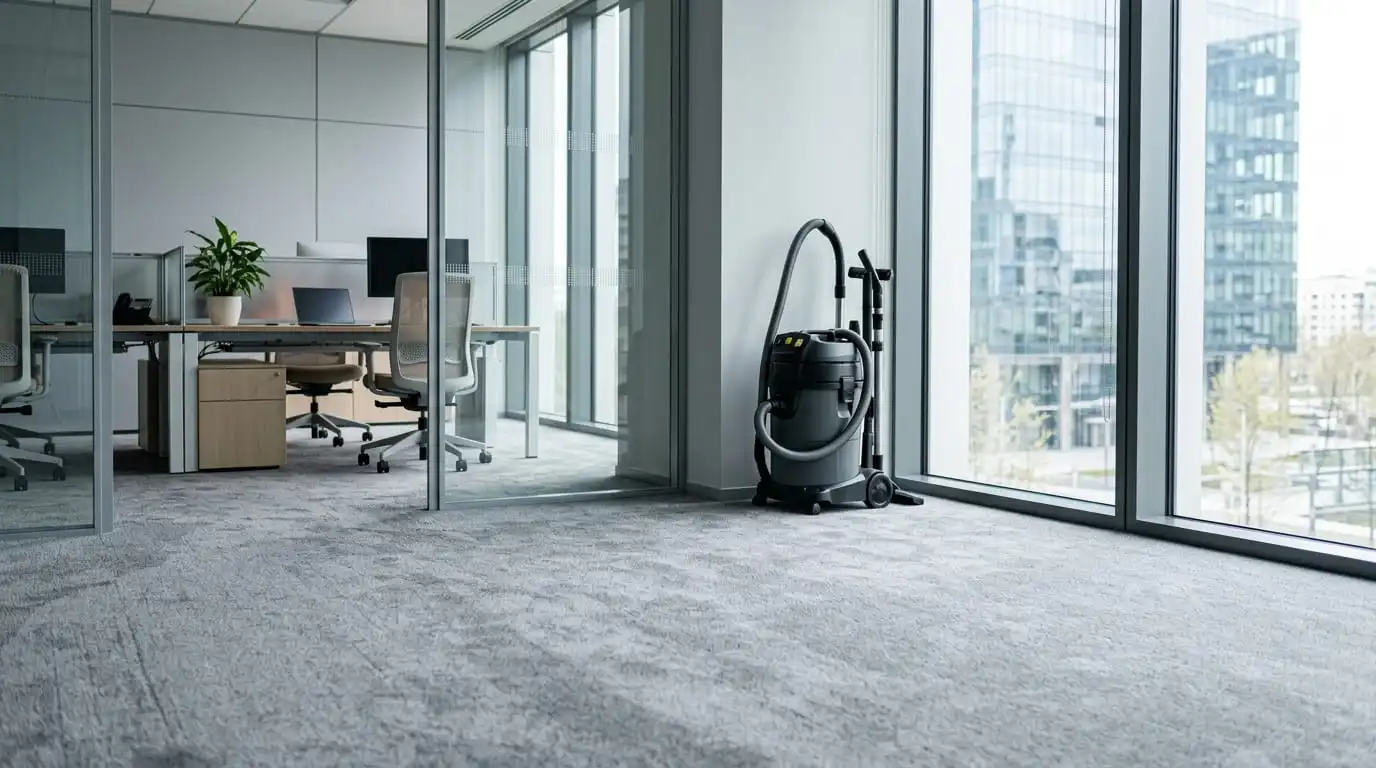
Vacuuming, spot cleaning and periodic deep cleaning are part of normal carpet maintenance. But a properly fitted carpet is easier to maintain because the surface remains stable and the edges and joins are properly finished.
For modular carpet systems, maintenance can also be more targeted because individual damaged tiles may be replaced instead of disturbing the whole floor. Our service offering includes tile replacement and carpet repair alongside installation.
That can be particularly useful for offices where a small area receives much more traffic than the rest of the workspace.
Professional Office Carpet Installation vs DIY Fitting
For a small residential room, an experienced DIY installer may sometimes manage a carpet project successfully. A commercial office is different.
| Factor | DIY / General Fitting | Professional Office Installation |
| Measurement | May rely on basic room dimensions | Detailed site measurement |
| Complex corners | More difficult to handle | Planned during installation |
| Seams | Greater risk of visible joins | Properly positioned and finished |
| Carpet tiles | Alignment can be inconsistent | Layout planned for the space |
| Large offices | Time-consuming | Planned as a commercial project |
| Custom designs | Difficult to position accurately | Layout considered before fitting |
| Repairs later | May be harder to plan | Installation can consider maintenance needs |
The difference is not simply about appearance. It is about reducing avoidable problems once the office is back in use.
What Should Businesses Check Before Hiring an Installer?
Before starting an office carpet project in Dubai, ask a few practical questions.
Will the installer measure the site?
Do not rely entirely on measurements taken from an office floor plan. A physical site assessment can identify details that drawings miss.
Will the subfloor be checked?
Ask whether existing flooring conditions, uneven areas and other installation concerns will be assessed.
What installation method will be used?
The appropriate method can vary depending on carpet type, backing and floor conditions.
How will seams and edges be finished?
These details have a major effect on the final appearance.
Who will move office furniture?
Clarify this before installation day so there are no surprises.
What happens if a carpet tile becomes damaged later?
If you are choosing modular tiles, ask about replacement availability and maintenance support.
Final Thoughts
Buying a quality office carpet is an investment, but the carpet itself is only one part of the result.
Accurate measurement, suitable floor preparation, careful cutting, proper alignment and secure fitting all contribute to how the flooring looks and performs once employees start using the space.
For businesses in Dubai, professional office carpet installation can help avoid common fitting problems and make better use of the carpet selected for the workplace.
If you are planning a new office, renovation or flooring replacement, start with the space rather than the carpet catalogue. Assess the traffic, layout and practical requirements first, then choose the carpet and installation method that fits the job.
We provides office carpet supply and installation services, including wall-to-wall carpets, modular carpet tiles, custom options, replacements and repairs.
Frequently Asked Questions
How long does office carpet installation take?
The time depends on the office size, carpet type, floor condition, furniture and installation method. A small office can be considerably quicker to complete than a large workspace with multiple rooms.
Can carpet be installed over an existing office floor?
In some situations, yes. However, the existing surface needs to be assessed first. Uneven, damaged or unsuitable flooring may need preparation before carpet installation.
Are carpet tiles a good option for Dubai offices?
They can be a practical choice for many workplaces because individual tiles can be replaced when necessary. They also provide flexibility when planning different areas of an office.
Is underlay necessary for office carpet?
Not every carpet installation requires the same type of underlay. The decision depends on the carpet construction, backing, subfloor, comfort requirements and acoustic goals. It is best to assess these factors before installation.
How should I prepare my office before carpet installation?
Clear smaller items from the installation area, discuss furniture movement with the installer and make sure access to the workspace is available. For larger offices, installation can also be planned in sections to reduce disruption.
How do I choose the right office carpet installer in Dubai?
Look for an installer who can handle site measurement, carpet selection, floor preparation and fitting rather than simply supplying the material. Ask about the installation process, finishing details and support for repairs or replacement.